Let’s revise the primary target of all social media agencies and freelancers.
Winning more clients and making more money, isn’t it?
To do that, you need to diverge potential clients to the best of your ability, and part of that process involves creating a startling social media proposal.
Before we plunge into the details of a social media proposal, let’s go through the rudimentary idea of it.
What is a Social Media Proposal?
For a buyer client, it is a prerequisite to know if they are going to get up-to-the-mark service and that their objectives will be achieved before agreeing to take the fellow services. While selling a service, there is an exchange of ideas but when a client is looking to sign up for a deal, they need more than just it.
A social media proposal serves the purpose of communicating through more than just word of mouth.
A social media proposal is formal documentation where a social media agency or a freelancer conveys their abilities to the client. Moreover, it also ensures that the client adequately communicates their needs before sealing the deal.
A social media marketing proposal comes with more advantages than just pitching clients. When it smoothly becomes a part of the workflow, it contributes majorly to organizing the work patterns and defining the sales process.
Vantage Point Performance and the Sales Management Association found that companies with a clearly defined sales process see 18% more revenue growth than companies that don’t.
This clearly demonstrates the role played by a social media proposal in the business’s growth. For a social media proposal to check off all the right boxes, it’s crucial to make decisions at every stage of its preparation consciously. With this, let’s march on how to create a perfect social media proposal.
How To Create A Perfect Social Media Proposal?
1. Reflect on Client’s Pain Points
For a proposal to directly impact the client, it needs to have more than just customary promises. It’s human behavior that when you understand somebody’s problems, they can start to trust you. Similarly, you need to address your client’s pain points and include even those they didn’t mention; by using your analytics skill.
Reflect strongly on their needs for social media and more strongly on how you can help them. This particular step can also benefit you by giving start points of your social media journey with fellow clients.
2. Define the Scope Of Work
Transparency is the key to any long-term relationship, and that is precisely why you need to determine your scope of work to look forward to a long-term work relationship. Knowing the reason behind everything you proposed gives a clearer picture to a client of what he/she is getting into.
Scope of work can often include the following:
- Publishing Schedule: Describe in detail what social media networks you are going to be monitoring and how often you will be posting on each one of them.
- Content Creation: Specify what kind of content you are going to create, i.e., images, videos, etc., and if it requires approval, then make sure to delineate the whole process beforehand.
- Strategy Calls: Set an amount of time frame and arrange review/strategy calls for the past week/month. This practice helps the client to assess and provide feedback on whatever is necessary regularly.
- Analytics and Reporting: Elaborate on what patterns you will be following on analytics and how often you will report to your client.
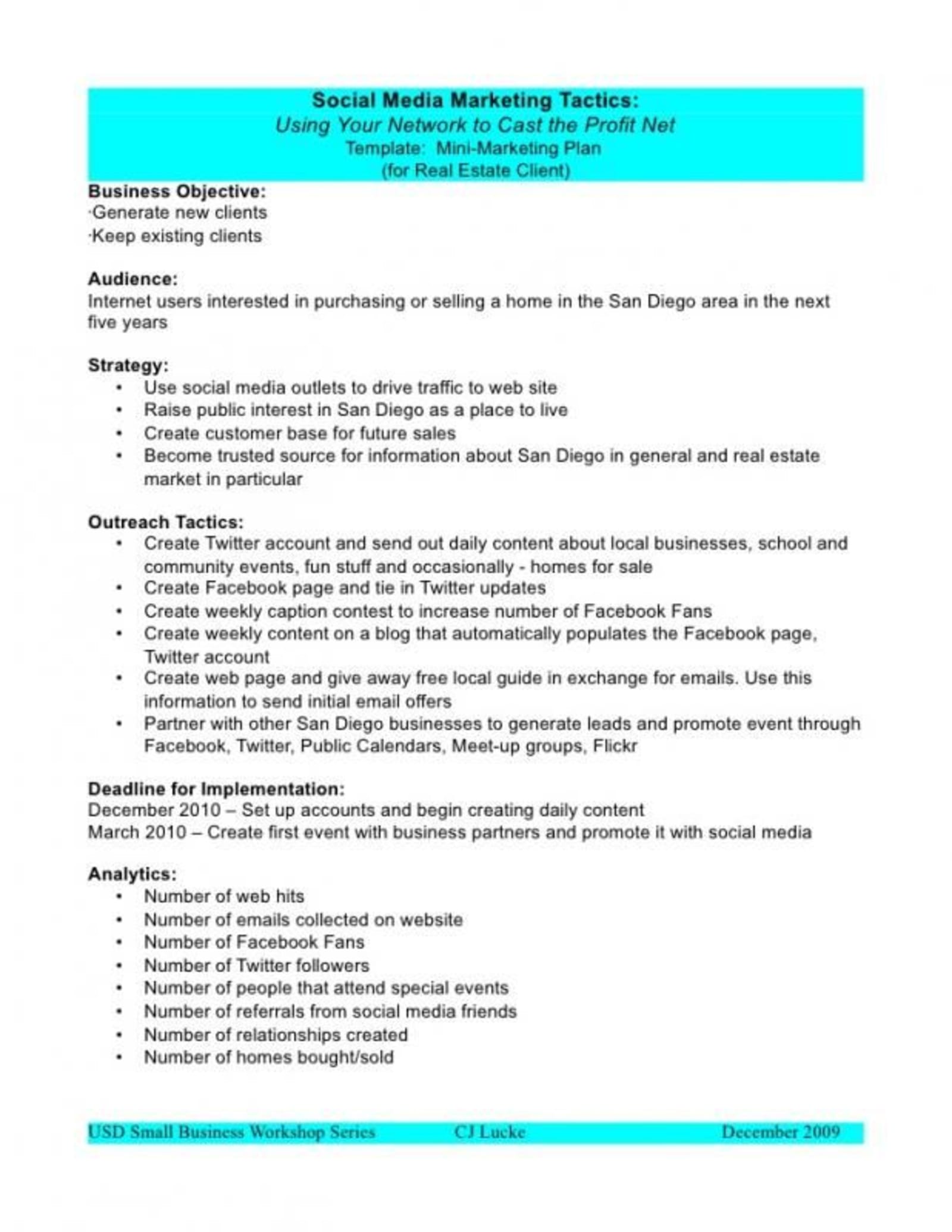
3. Include Case Studies
Who doesn’t need social proof before signing up for any service!
To communicate your abilities to stand out from the crowd, you need to present what you do best. And past work is the best way to gain trust from a fellow client.
“Work speaks more than words.”
Presenting your work to a client isn’t always going to be a similar process. You need to present the best of your work according to your client’s needs. For example, if your client is looking at increasing their sales through social media, showing them how you have increased followers for past clients is irrelevant. They would want to know how efficiently you have performed in increasing conversion rates and not just the number of followers.
Pro Tip: When you present your past work, always focus more on the results you achieved than explaining the amount of effort you put.
4. Give Pricing Details
This is that section of your proposal that some potential clients might directly reach after receiving the proposal. When working on the pricing section, it is important to clearly determine the cost breakup as the client should be well aware of what he is paying for.
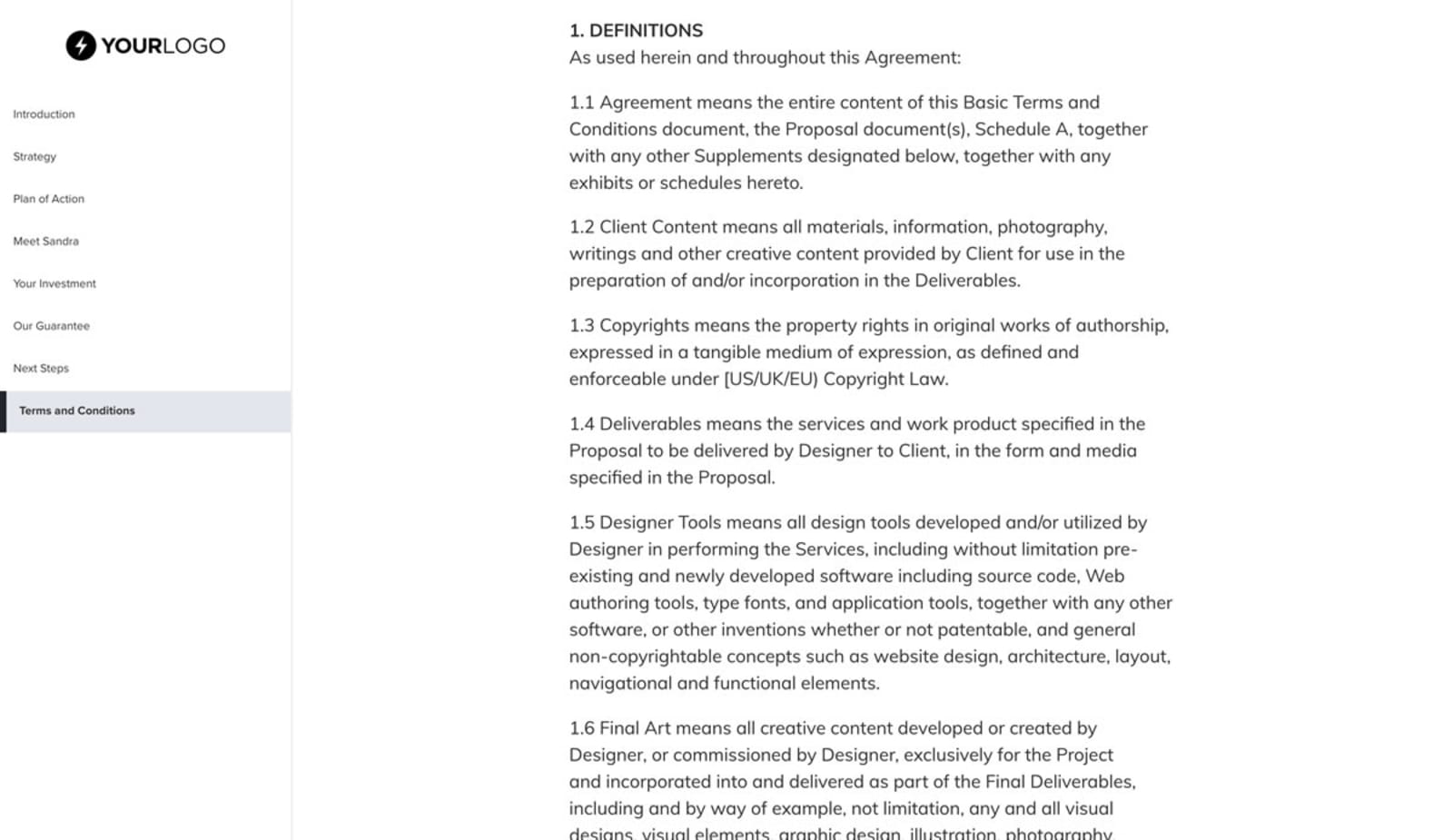
5. Terms Of Agreement
After presenting the detailed information of everything a client might think of, don’t end up ignoring the legal part of the proposal. This is where you can clearly define your agency’s terms and conditions.
In any case, if your relationship with your client is compromised, this part of the proposal will always back you up. In other words, it can prevent data breaches, payment issues, etc, and therefore protect your business.
This can include segments like:
- Billing Practices
- Work Pattern
- Termination
- Fees
6. Provide Next Steps
Remember the importance of a CTA on social media?
In the same way, it is always recommended to let your clients know what happens next after the proposal acceptance or rejection. To avoid going back and forth with the client, make your and their work easier by merely writing it down.

Nailing the social media proposal is half the battle, but we all are always a snap second away from making a mistake. This guide demonstrates not only the do’s but also the don'ts to make you all ready to go and crack that deal you have been working for.
Well, let’s not deny that even a marketer like all people can end up making a mistake when working on an elaborated social media marketing proposal. Unlike other mistakes that are solvable, even a minor error in a social media proposal can end up making you lose potential clients and bring you down in the marketing industry.
Don’t worry. We have got your back!
Let’s go through the possible mistakes that can occur and how to avoid them.
4 Common Mistakes to Avoid While Creating a Social Media Proposal
1. Putting your needs before the client’s needs
What we normally look for in a business offering is how they are solving our problems and that is exactly what you need to primarily present to the client. The client will be interested in your achievements, work patterns, objectives but what he must be looking for in the proposal is how you will provide them solutions.
Present significantly about how you can provide them relevant solutions and avoid talking more about your demands and requirements as this can naturally turn off a potential client.
For example, if your client wants to grow their following base on Instagram, get into the details, and let them know what kind of image content you will be using and how it will help them. Also, promise to experiment with any new type of content/update that comes up. This step can make them trust you more than any other agency.
How to avoid it:
Before creating a social media proposal, think about how your client will perceive the proposal, and then start working on it. Talk about your success through relevant work proof and not just words.
Make the client believe that you can solve their problems and try to dilute your requirements with the objectives/workflow.
2. Losing the client’s interest
Irrelevant data can easily distract the client from focussing on the proposal. To make sure that never happens, be precise in what you are presenting and hover over how it will add to the client’s work goals. Talk more about the kind of content you are going to create and what kind of approach will be right to attract their audience.
If you talk about something that adds to the client’s work, they are never going to get bored, but with irrelevant information and metrics, they might just trash out your proposal and move to the next one.
How to avoid it:
Let your social media proposal talk with crisp, relevant, and precise data to the client. Make the client believe how you can monetize your social media expertise. That is exactly when you will be able to make the client stay throughout the proposal.
3. Poor outline of the proposal
With a non-composed proposal structure, you are just increasing the reading and grasping tension of the client. For a client to properly understand your objectives, work pattern, etc., using a logical outline is recommended to the marketers.
How to avoid it:
Going back and forth from your perspective to your client’s can really help you write a better proposal. Follow a predefined outline for the proposals you create, and always be open for modifications depending on the client’s needs.
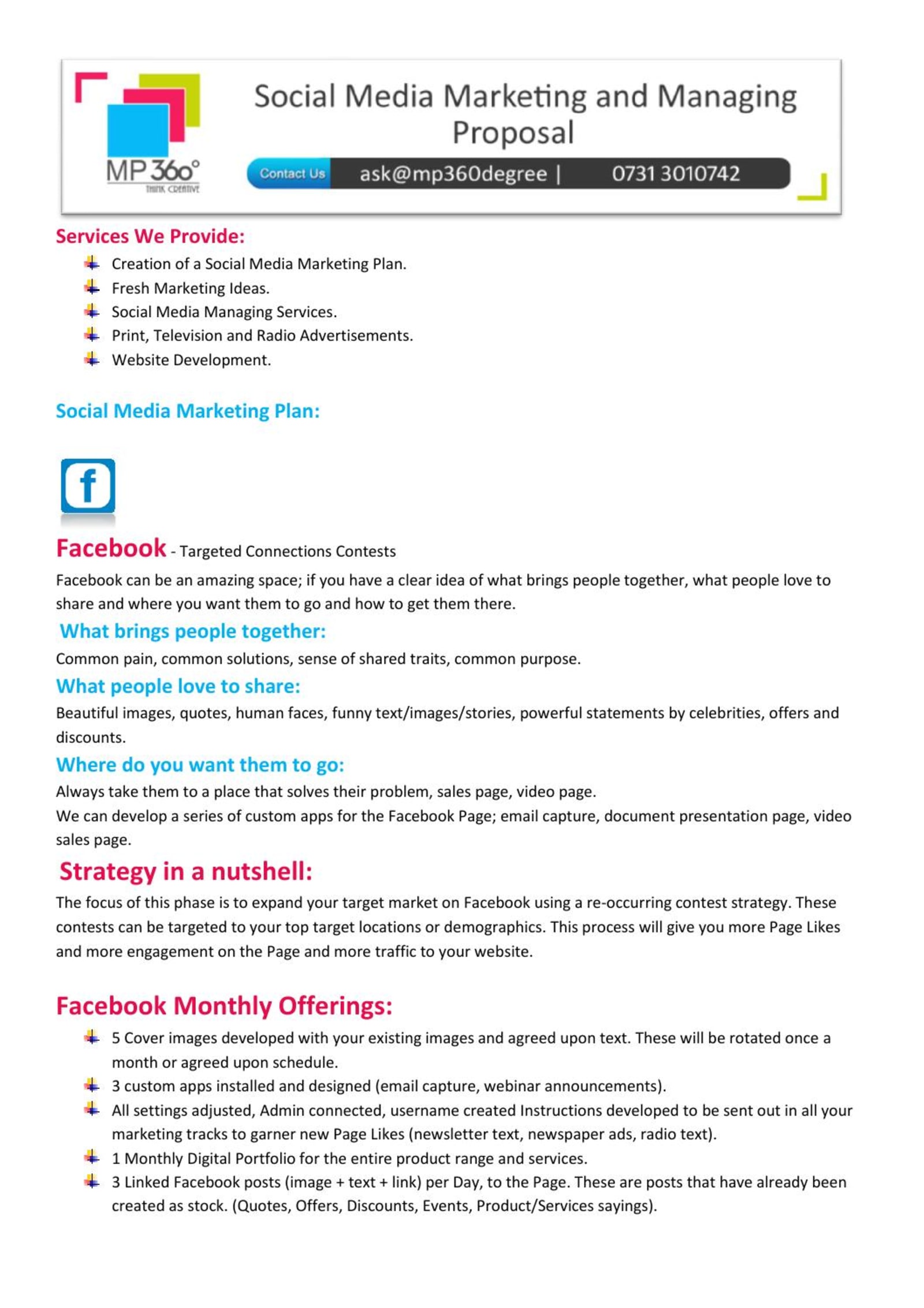
4. Not having a proposal template
Modifications are always mandatory in a proposal depending on the client’s needs, but you can’t really work from scratch for every proposal you send out.
As an agency, you might be sending dozens of proposals every now and then, and working from scratch for each one of them is going to consume more time, which can result in compromising your work quality.
How to avoid it:
Work on a template from scratch or take help from template resources available on the internet. Use that master proposal template for every social media proposal you create with added modifications wherever necessary. This can not only save a lot of your time but also increase the quality of your proposal as now you will be investing all your efforts in making the master proposal template.
Over to you!
A social media proposal is a coin with two sides. It can accelerate your success rate and can even bring it down. With the increasing competition in the market, an agency needs to work smartly on its proposals to win over a client.
While proposals serve a lot of purposes, transparency is the root of almost every element of it. Let your clients know about what you will be doing and, more than that, why you will be doing it. Even simple details such as posting schedules, target audience, etc., can be a part of your proposals.
To keep the transparency maintained, inform your clients if your agency uses any social media tool and, meanwhile, reflect on their budgets. Though with the deflecting budget of clients, if needed, you can give a shot to several Buffer alternatives available in the market.
So spend as much time as needed in creating a social media proposal until you are confident that it will bring profit to your agency. In the end, make sure you have taken them on a helpful and profitable social media journey through your proposal.