So you went and developed a functioning online store. Congratulations!
You’ve put in some serious work to develop an attractive set of goods or services, digitize them by adding them to an online inventory, and then crafted a beautiful and compelling website around the promotion and sale of these goods.
The hard part is over, now it’s time to zone in on optimization and iteration of the buyer's journey.
A healthy starting point to that end, is the polishing and perfecting of your customer journey map.
A customer journey map is exactly what it sounds like — a visual representation of the journey a visitor goes through on your website from landing to achieving whatever goal you principally desire, be it a sale, enquiry, or sign-up.
You probably have a rough idea of what this looks like, but it’s helpful to actually perform customer journey mapping. It enables you to systematically identify a pain point and opportunities for optimization.
What are these opportunities for optimization, you ask? Well, we’ve got six great ones lined up for you below, complete with real life examples to support their effectiveness.
Let’s get into it!
1. Nail down lead generation
In marketing circles, lead generation is the important practice of gaining leads by offering valuable content in exchange for visitor data, like email addresses or account sign-ups.
Just underneath an actual sale, lead generation is probably the most valuable objective to work into your customer journey maps. If successful, you are rewarded with useful customer data like an address with which to target your marketing efforts toward.
It’s more valuable than ‘open’ marketing approaches, as you know that the visitor has already meaningfully engaged with your content and is more likely to convert later down the pipeline.
This is, of course, easier said than done, though.
You have to provide content that’s worth engaging with to convince a user to part with their data.
We recommend working useful content into important consumer touch points that support your central idea, or doing popups.
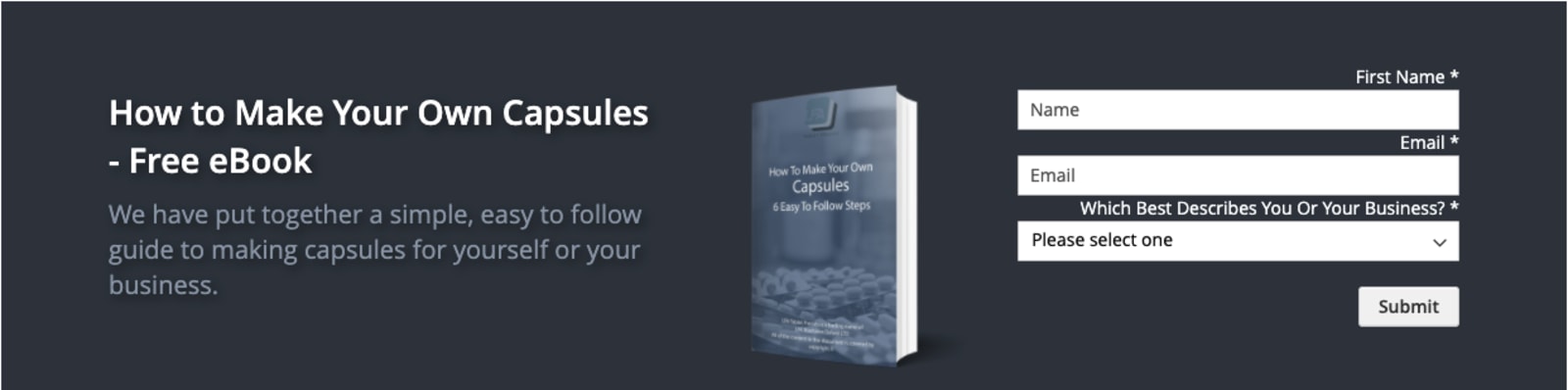
LFA capsule fillers, a comprehensive capsule filling solution, does this brilliantly by offering a free ebook related to the practice of capsule filling, in exchange for your name and email address.
2. Work in some social proof
It’s easy to imagine companies getting away with straight up lies about their products or services before the advent of social media.
But these days, when a user can list off every detail about their customer experience to the world stage in a furious tweet-storm, you won’t be gaining the trust of your prospects until they see some social proof.
It can be in the form of user-generated images, reviews, or even a counter showing the number of sales (or, using more appropriate terminology, ‘number of customers made happy’).
Check out vegan milk-base company JOI for a good example of this.
You don’t have to scroll very far down the homepage to see a lineup of customer satisfaction stories from real customers, each with a star rating.
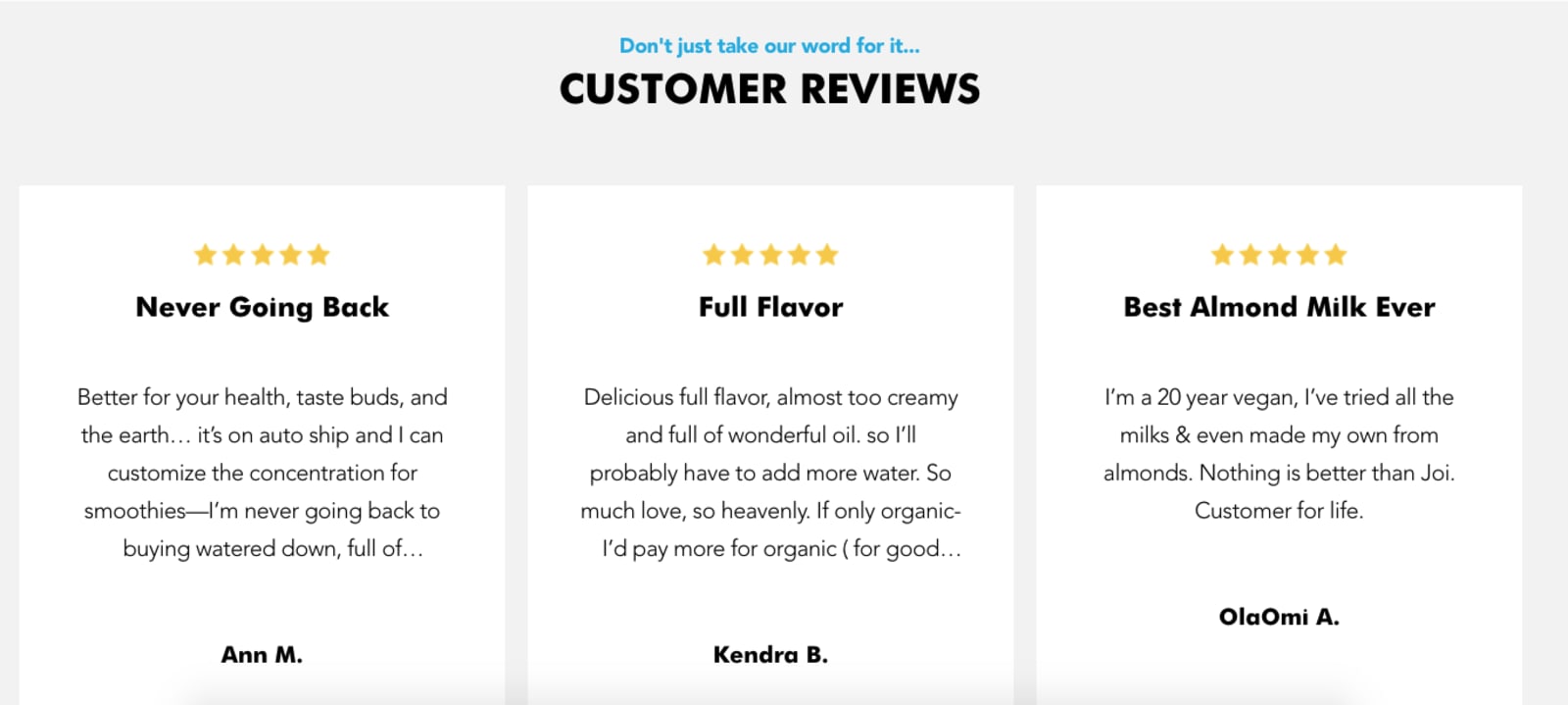
In the landscape of online retail, where you can never really be 100% sure of what’s going to come through the door after you order it, customer reviews assuage the uncertainty of online shopping.
3. Don’t ignore product lifecycle management (PLM)
Product lifecycle management refers to the management of data and processes used in the design, engineering, manufacturing, sales, and service of a product across its lifecycle.
You might think of the product life cycle as a separate concern to the customer journey map.
They involve different operational teams and exist on opposite sides of the customer/business dynamic.
But, while these systems are indeed distinct from each other, they can work synergistically when assessed side-by-side.
When mapping customer journeys, you will find spots where conversion is failing or interest sharply drops. The answer to these mysteries may well exist within your product lifecycle.
Perhaps your once successful product has out-aged its attractiveness and has slipped firmly into the decline stage. The solution for this would be to launch an extension strategy, or go back to the drawing board to develop an exciting new iteration.
Let’s take Nlyte, a DCIM software company, for example. When examining drawbacks, Nlyte might find that visitors are withdrawing from their product because of the lack of information and resources about DCIM.
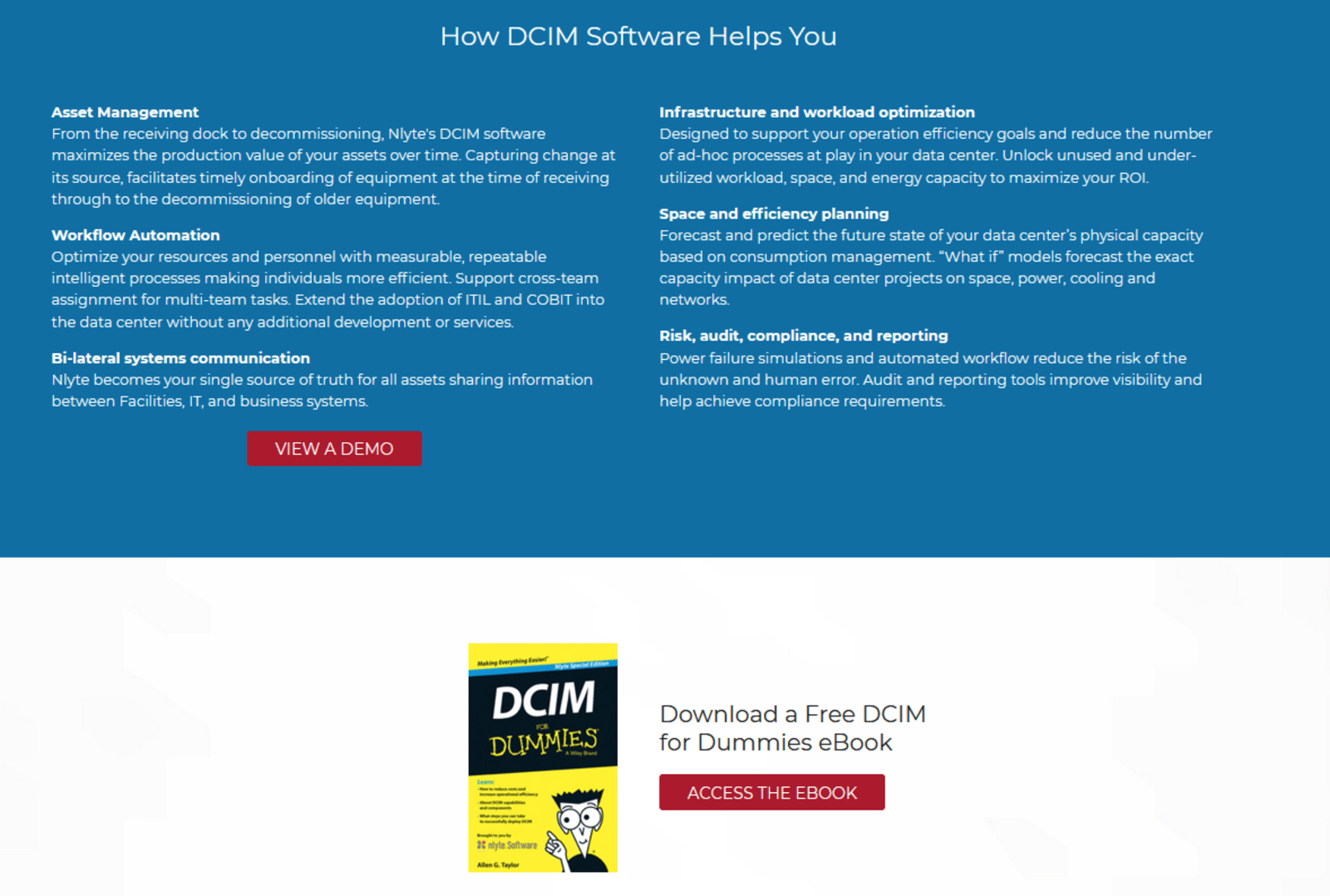
They refined their customer journey by doing two things: letting visitors view a demo of their solutions, and offering free resources such as this DCIM guide that Nlyte published.
You wouldn’t find this answer looking only at the customer journey map, so don’t ignore PLM when analyzing the customer's journey.
4. The power of content marketing
Content marketing is a powerful technique that manages to squeeze in several meaningful deliverables in one.
If you weren't already aware, content marketing relates to creating and publishing articles and other content online to a defined audience.
Without revealing your hand too much, what you’re reading now is a form of content marketing (a virtuous one, rest assured).
The ‘content’ part of content marketing achieves a few things if done correctly. It attracts attention and generates leads, increases the efficiency of the sales funnel, increases credibility, and engages your target audience.
The fact that you can do all of the above in one go is a massive asset in terms of the efficiency of your investment.
If you’re wondering what that could look like, check out this article from an investment app designed for early-start guardianship investing for kids.

Not only does it explain the core premise of what the company offers, it also acts as instructional guidance for users with genuinely useful information, while doubling as a covert advertisement for their services.
5. UX as an operational priority
There’s probably a whole team of engineers who will be happy to express the importance of a great UX (user experience) for you, but allow us to reiterate.
If the customer journey is a map, your UX is the road.
This is a technical discipline that could also be described as an art. Its importance can never be outweighed in the context of an online store.
Some elements to consider are spacing, information density, visual aides, interactivity, and how well you can customize the experience for users.
For a great example, look no further than language tuition site Preply, which manages to involve all the key elements of tutor research and selection in a way that actually increases customer engagement.
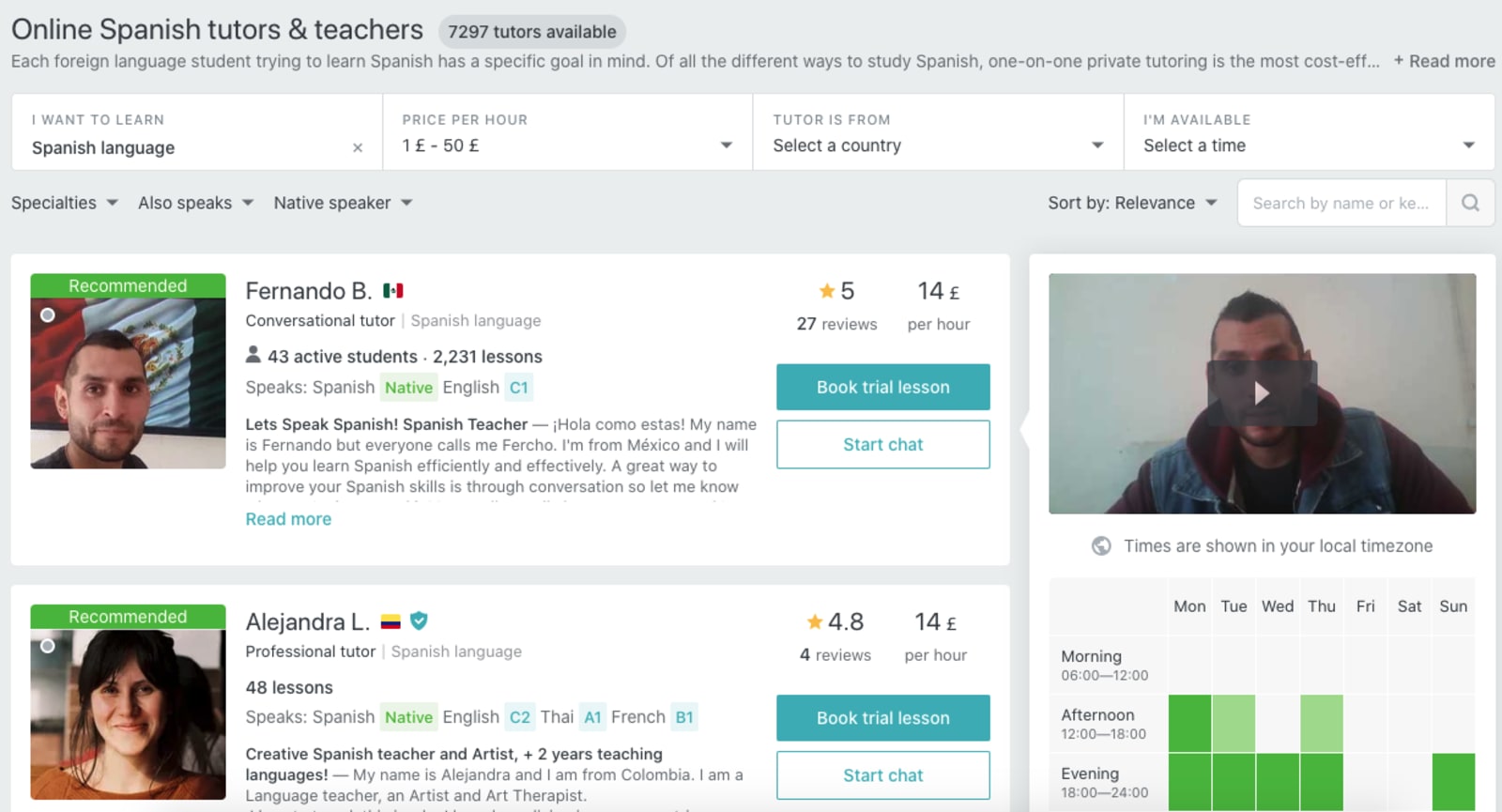
Prices, reviews (social proof, that’s a callback!), images, prompts, and more can be found in one space without over-cluttering. All of this gives the user complete access and control.
A great UX might be the thing separating you from supercharging your conversion rates, so don’t discount it when looking at your customer journey map.
6. SEO - the most necessary of evils
Is it technical? Is it a guessing game? Should you hire someone to do it? What do the algorithms ask of you today?
It seems like no one truly knows, but that doesn't make it any less important.
In an online landscape still dominated by search, SEO (search engine optimization) is still the name of the game, especially in the early awareness stage.
This is unfortunate, because it’s quite hard to get right. Not only are the rules and best practices hidden from plain view, but they are subject to frequent and drastic changes.
Content marketing is a great start, as well as link-building, optimizing SEO architecture, and many other techniques.
If you’re already hitting the main tenets of SEO, then great. Keep doing what you’re doing, there’s no harm in constantly putting stuff out there. And you don’t have to hire expensive experts to make progress.
However, if you’re doing everything in the SEO wheelhouse and still not ranking, we recommend getting an SEO audit. It will offer valuable expert insight into course correction without the expensive price tag of getting someone else to do the heavy lifting.
Conclusion
If you were guiding someone you cared about on a journey, wouldn't you map out the journey on a route beforehand?
They’d have a greater chance of getting there safely, not taking any weird side routes or getting completely lost on the way.
The same applies to your online store. You can give your customers a car and hope for the best, or you can meticulously plan the route, adding anything that might make the journey easier, quicker, and more efficient.
We encourage you to map out the purchase journey from your customer's perspective from A to Buy, applying all the tips and tricks we included here today for the most effectively optimized journeys.
Happy travelling!

Ray Hein is the CEO and founder of PropelPLM, a cloud-based product success platform. He is a SaaS veteran with 20+ years of PLM, development and product launch experience in both hardware and enterprise software organizations. Ray has held multiple executive positions at companies such as Agile Software, Apttus, Vendavo and Centric Software.