What is the definition of advertising graphics? Before we answer this, it's best to explain first the difference between advertising design and graphic design. Although they share many similarities, they do overlap in some areas.
Graphic design combines text and images to communicate their ideas. It aims to educate, persuade, organize, stimulate, locate, identify, draw attention to, and entertain. With this in mind, graphic designers are creative professionals who use their talents to represent brands. They can create typefaces for movie credits and TV advertising, books, magazines, menus, and computer screens using drawn, painted, photographed, or computer-generated pictures, as well as letterforms.
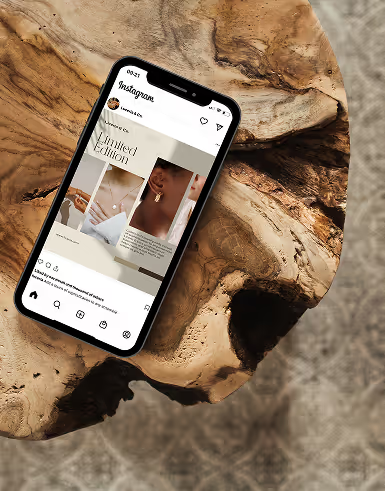
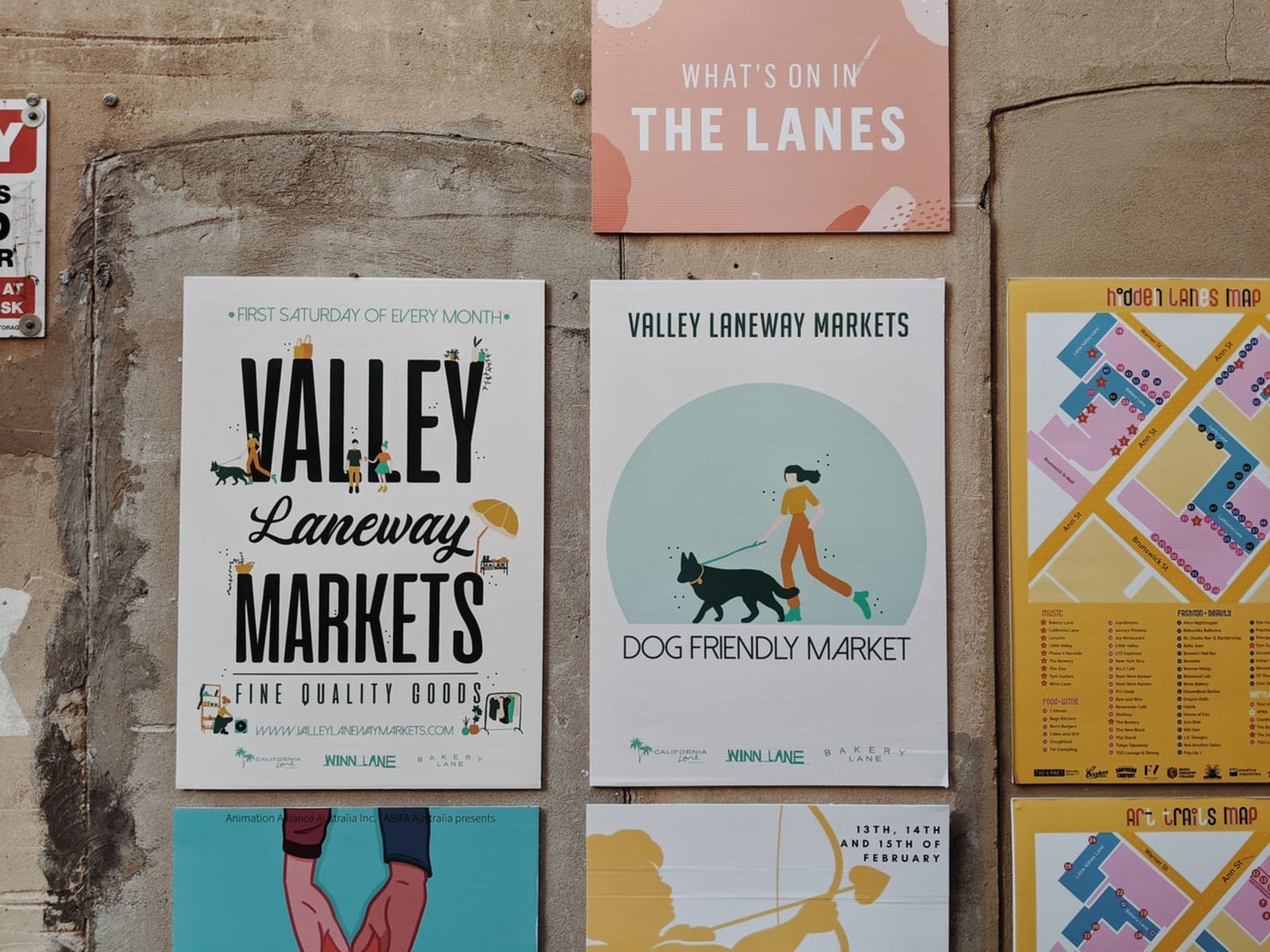
On the other hand, artwork made expressly for marketing products or services is referred to as advertising design. It is a combination of marketing and design. Ad designers often use Logos, typography, signs, and other graphic design elements to catch attention. They are created purely to market a product or service.

Rather than being merely creative, ad designers need a more systematic approach that considers the following:
• While ad designs might be entertaining, they must appear professional.
• The product or service must have a benefit.
• Ad designs are made as a sales tool and are solely utilized for that.
Before producing a new design in advertising, ad designers consider factors such as the client's needs, the design's intended message, and the attraction to customers or users. Meeting with clients, creative or art directors, and conducting their own research are all ways graphic designers obtain knowledge pertinent to their designs.
Graphic designers use this information to produce sketches or layouts, which they can do by hand or on a computer, to establish their design vision and incorporate aspects like colors, sound, artwork, photography, animation, typestyle, and other visual features.
The graphic designer then decides on the element's size and placement on the website or screen, creates graphs and charts from the data to be presented, and consults with copywriters on the language that will accompany the design. Clients or art/creative directors are then shown the finished drawings for approval.
When a product is sent to be published or printed, graphic designers meet with publishers to identify the best type of paper and ink for the job and then evaluate the proposed final copy for faults before it is published.
Which role is the most difficult?
There isn't a typical response to this. Both roles come with their own set of difficulties. And this is dependent on their area of expertise as well as the design project's goal. It's more difficult, for example, to compel a graphic designer to produce a product that will sell. Similarly, developing brand guides may take some time for an advertising designer.
When a detailed brief is provided, however, an advertisement designer's job becomes much easier. They will almost always be given a detailed brief to begin the project. Graphic designers are in a different situation since their guidelines are more abstract. To supply distinguishable brand design aspects, they will have to think more creatively.

Is it possible for advertising and graphic designers to collaborate?
Advertising and graphic designers can undoubtedly collaborate, despite their distinct areas of expertise. They can produce marketing graphics that will accelerate your company's growth if they work together well. This is where advertising graphics come in. Here's how to do it.
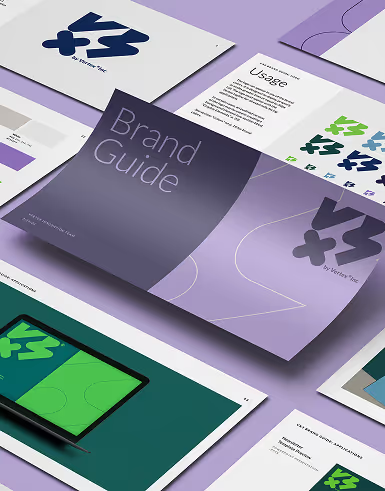
The client will choose their favorite designs once an advertising designer delivers their creative ideas to them. The next step is to create graphics. After that, all visual assets will be put into a brand guide for the client's approval.
Is it possible for a designer to excel in both advertising and graphic design?
It's not impossible, but it's a difficult fish to catch. It's not easy to understand both graphic and advertising design principles. Although the principles of both approaches may be the same, becoming a good advertising and graphic designer requires expertise and years of experience.
Before you choose one, make sure you understand your company's goals. Create a job description to help you find the perfect people for your project. Delesign is your company to go for this objective. We can match you with a suitable advertising graphic designer to meet your unique needs.
Delesign designers create persuasive materials such as advertising graphics and understand the psychology behind a successful advertisement. They spend time researching and investigating the most acceptable ways to reach out to their target audience. What colors, themes, approaches, and other items to utilize will be determined by the audience's demographics (age, education, economic group, and so on).
Indicators of well-designed advertising graphics
- When consumers pay attention to what the visual advertisement is trying to convey.
- When you manage to get people's attention.
- When you received a lot of positive comments from your customers about your advertisements.
Brand is communicated through design
Advertising campaigns are used to raise brand awareness or to persuade customers to purchase a company's products or services. Trust is one of the most important aspects in persuading people to buy.
Customers label specific offerings in their thoughts using brands: this brand indicates quality and luxury, or this brand represents comfort and value. A brand is a shorthand for whatever your target customers hold in the greatest regard.
Every piece of creativity you release, whether it's blog posts, brochures, Google PPC advertising, even Nimlok trade fair displays, says something about a brand. Years of hard effort and excellent impressions can be ruined if the design isn't professional and consistent with the brand's key messaging.
On the other hand, good design speaks volumes about a company's professionalism, quality, and market positioning.

Visibility is increased by good design
Even the most effective campaign will gain traction only if it stands out. It has to cut through the clutter of competing signals from advertising and content creators. It then has to grab and maintain the attention of the correct prospect. The design necessary for this will vary depending on the goals of your campaign and your target audience.
Is your audience more receptive to a stark, minimalistic approach, or do they prefer a striking, borderline-tacky appearance and feel? Whatever it is, effective design helps you communicate with your prospects memorably, and it gives your campaign the best chance of being seen.
Conversions are driven by design
If your clients have considered conversions at all, they've likely considered sales figures or copywriting with a call to action. Many individuals are unaware of how psychologically appealing design can help.
On a page, where does a viewer's gaze land? What feelings are evoked by the images, colors, and layouts you chose? Is there one area that stands out above all others – the essential takeaway? A well-crafted pitch or concept can be boosted by good design, allowing it to convert more people.
The use of design enhances the message
A well-designed layout will emphasize the message you want to get through. This is related to the debate over the value of design in branding, but it's also about the ability of design to communicate a message and elicit a response. Consider a nonprofit that is soliciting funds or simply spreading the news about its mission. Hundreds of content words on the same topic can communicate more to a potential sponsor than a few nicely chosen photographs.

Krisana is a journalist turned SEO Content Writer with keen interest in tech, software, and innovations. She is an avid fan of Elon Musk and wants to be part of the future Human Mars Mission. In the meantime, she spends her time researching and writing about everything that could make life a better place on Earth. Outside of work, Krisana dedicates her time with her two lovely kids.