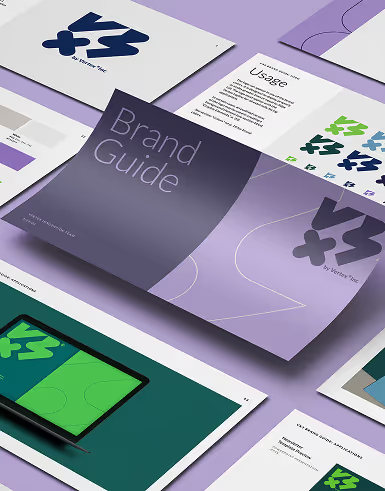
We all know that color can affect a person's mood and emotions. But did you know that specific colors are more financially profitable than others? Yes, different colors can evoke different reactions in people, and this knowledge can be used to your advantage as a business owner. By understanding how color psychology works, you can use it to make your business more profitable. Think about the colors you use in your branding and marketing materials. Are the design and color evoking emotion, or do they not?
What Is Color Psychology?
Color psychology is the study of how colors affect our emotions and behavior. It is a branch of environmental psychology that studies how our surroundings affect us. Color psychology can be used in many ways, such as choosing the right color for your brand or picking colors for your website or marketing materials that evoke certain emotions in people.
How Does Color Choice Influence Consumer Behavior?
Color choice can influence consumer behavior in many ways. Some studies have shown that specific colors can affect our moods and emotions, which can, in turn, influence our behaviors. For example, the color red has been shown to increase feelings of excitement, energy, and even appetite. On the other hand, blue has been proven to be calming and relaxing.
Businesses can use color psychology to their advantage by choosing colors that will elicit the desired response from consumers. For example, a business selling fitness products may want to use red in their branding and marketing materials, as this will subconsciously make people feel more motivated to work out.
The Psychological Effects of Color
Color psychology is a branch of marketing that uses the psychological effects of color to influence consumer behavior. The idea is that certain colors can trigger certain emotions in people, which then leads them to make certain decisions. For example, blue is often seen as a calming color, so it could be used to encourage people to buy products that are meant to help them relax.
There are a few different ways that businesses can use color psychology to their advantage.
1. Use colors that match your brand identity
If you want your customers to associate your brand with certain emotions, then you should use colors that symbolize those emotions.
For example, if you want your brand to be seen as trustworthy, then you could use blue in your branding.
2. Use colors that contrast with your competition
If all of your competitors are using the same color scheme, then you can stand out by using a different one.
This will help you to attract attention and make people remember your brand more easily.
The Basics of Using Colors in Business
Businesses can use color psychology to their advantage in a few different ways. One way is to choose the right color for your brand. It means picking a color that will evoke the emotions and values you want to be associated with your business. For example, if you want your brand to be seen as trustworthy and reliable, you may want to choose from one of the three primary colors.
Blue is often seen as a calming color, so it could be used to encourage people to buy products that are associated with relaxation or serenity. Yellow is often seen as a happy and positive color, which could be used to promote products designed to make people feel good about themselves. Red is often seen as a passionate and exciting color, which could be used to sell products associated with love, adventure, or danger.
There are also a few other colors that can positively affect people's emotions and perceptions. These colors include green, purple, and pink.
How to Use the Three Psychological Primary Colors in Your Business
Blue:
Use blue to encourage people to buy products associated with relaxation or serenity.
Yellow:
Use yellow to promote products designed to make people feel good about themselves.
Red:
Use red to sell products that are associated with love, that are exciting or passionate.
Examples of Businesses That Use Color Psychology to Their Advantage
1. AT&T
The large telecommunications company uses blue in its branding to subconsciously suggest to customers that their service is reliable.
2. McDonald's
Did you know that the fast-food chain's infamous yellow arches are meant to evoke feelings of happiness and positivity?
3. DreamMaker
The coaching company DreamMaker chose the color red for its branding to create excitement. They found that the color red is consistently associated with a higher probability of winning.
4. Walmart
The retail giant chose the color blue for its branding and store design to create a feeling of trustworthiness.
5. UPS
UPS's use of the color brown creates an image of dependability and stability. While there are no hard and fast rules regarding color psychology, understanding how different colors can affect moods and emotions can help you choose the right color for your business.
6. Citylocal 101
In order to attract the attention of neighborhood businesses, they contrasted light blue with navy blue to make it more prominent. In fact, navy blue exudes power and strength quickly, whereas light blue conveys tranquillity by mixing cold and cool emotions.
Choosing the Right Colors for Your Business
1. Consider your industry - different colors can convey different meanings in various sectors. For example, white is often associated with purity and cleanliness in the food industry, but it can represent new beginnings in the wedding industry.
2. Think about the message you want to communicate - what feeling do you want your customers to have when dealing with your brand?
3. Use color psychology to influence customers - for example, yellow is often associated with happiness and can help encourage customers to make a purchase.
4. Be aware of the cultural associations of different colors - what might be considered professional in one culture could be aggressive in another. For example, white is often used in Western countries to symbolize purity and innocence, while in many Eastern countries, it is associated with death and mourning.
5. Use color to create contrast and make your brand stand out - for example, a black and white color scheme can be used to create a sophisticated look.
6. Use color to target specific demographics - for example, baby boomers are more likely to respond to blue and green colors. At the same time, millennials are more likely to react to pink and purple.
7. Use color psychology in your marketing and advertising - for example, using the color red in a sale sign can increase the likelihood of customers noticing.
8. Be aware of how colors can be used in different ways - for example, light colors can be used to create a feeling of spaciousness, while dark colors can be used to create a feeling of intimacy.
9. Use color psychology to create an overall feeling for your brand - for example, using warm colors like red and yellow can create a feeling of excitement while using cool colors like blue and green can create a feeling of calm.
10. Be sure to match the colors you use with the type of message you want to communicate - for example, using soft pastel colors can convey a feeling of warmth and approachability while using bright, bold colors can convey a feeling of energy and excitement.
Conclusion
Color psychology is a powerful tool that can be used to give your business a competitive advantage. By understanding how color affects mood and behavior, you can use it to create an overall feeling for your brand, communicate specific messages, and even influence customer behavior. When used effectively, color psychology can be a powerful marketing tool that can help you reach your target audience and achieve your business goals. If you want to learn more about color psychology and how you can use it to benefit your business, consider taking a course or reading some of the many excellent books on the subject. With a little bit of knowledge and effort, you can start using color psychology to your advantage today.

Allaine is an ambassador at Delesign. She is an adventurer and a dreamer who believes in turning ideas into reality. She loves sharing links on human emotions, relationships, and all things digital.