Consumers today are a lot smarter, which is why investing in a relationship with them is imperative if you want your business to succeed. In a 2019 report, 81% of consumers said that a brand’s trustworthiness is a non-negotiable deciding factor when buying products. For this reason, among others, the significance of corporate identity cannot be stressed any further. So what is it exactly, and why does every company need to have it? This article will focus on corporate identity definition and how you can develop one for your company. Briefly, we will discuss where Delesign can come in to help you build your corporate identity. Let’s dig in!
Corporate Identity: Definition and Importance
Corporate identity is a company’s own image, and it also entails the strategic measures a company employs to build and maintain this image. It sounds simple from the get-go, but creating and sustaining your corporate identity requires rigorous planning and many resources. All areas of and people involved in your company come into play. The tricky part is that the bigger your company is, the more detail-oriented and particular you need to be to protect your company’s image and ensure consistency both internally and externally.

All things considered, how vital is corporate identity to your business? Well, let us begin with its internal significance. When employees understand and appreciate your corporate identity, it is a whole lot easier for them to deliver and thrive. A good and well-preserved corporate identity breeds loyalty and healthy working dynamics inside the workforce, especially when they feel and know that they contribute to the bigger picture.
Now, let us talk about its external significance. There are numerous external factors, one being the measures taken to attract customers and sustain healthy brand-customer relationships. Your corporate identity is how you present your company to the public, which goes beyond the products and services that you offer. It is all about your values and how they align with those of your customers.
5 Essential Aspects of Corporate Identity
Now that we have shed light on corporate identity definition and significance, let us discuss the five core aspects of corporate identity. These include the following:
Corporate Design
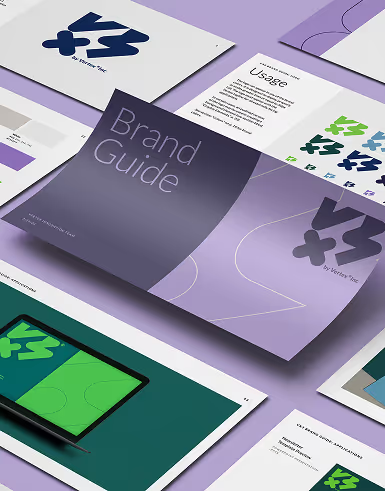
As the term already likely suggests, corporate design is all about the sensory elements used to represent your company. It is in this aspect where things like a company logo and office aesthetics come into play. The consistency and even timelessness of these materials are vital, so you really need to take time to conceptualize your corporate design. It will determine how your future marketing collaterals will look like, not to mention your websites, the interior design of your offices, business cards, among others. More importantly, it is the first thing that people will associate with your brand. It should be appealing and can be retained in people’s memories easily.
Corporate Behavior
Corporate behavior refers to how your company conducts itself and how it relates to people directly involved in the business. Particularly, ask yourself how you would like your company to behave around its employees, shareholders, suppliers, and most importantly, customers. How does your company treat people and various entities? How does it conduct itself in public? How does it deal with a crisis? How does it handle financial matters? These are just some questions you need to ask when identifying your corporate behavior.
Corporate Culture
Basically referring to how you operate, corporate culture is internal by nature. It is all about the values and norms you establish and let flourish in the workplace. It even extends to the legal order put in place for the conduct of business. What are the rules of conduct within your company? Corporate culture is critical to every employee’s success and growth, so you must not overlook it. Employees thrive and contribute significantly to your company’s success when the corporate culture itself allows and supports them.
Corporate Communication
Corporate communication is basically all about the specific language used to express your corporate culture. It refers to how your company expresses its values and even its concerns both internally and externally. How does each department of your company relay with one another? What is the chain of command like? What kind of corporate language is the most efficient for your operations? These are just some questions you need to ask internally. On the other hand, external corporate communication includes advertising, marketing strategies, and public relations.
Corporate Philosophy
Lastly, we have corporate philosophy, which is your company’s soul. Of course, any business’s goal is to make money, but other than that, what fuels your company? What are your mission and vision, and how do you intend to contribute to society’s betterment? The values that your company upholds are part of your corporate philosophy. This is your company’s core— the very reason of its existence. The most important question you need to answer is: why do you do what you do? When you have a clear picture of the answer, developing your corporate identity around it would be a whole lot easier.
Developing Your Corporate Identity
With a better understanding of the five essential aspects of corporate identity, you can start working on your corporate identity. Here are four things you need to remember when developing your corporate identity:
Know your company.
Having a solid corporate identity means having a strong sense of what your company is all about. What is the “why?” behind it? What are its short- and long-term goals aside from being profitable? What sets it apart from its direct competitors? What value does it provide the target customers? Answering these questions will go a long way. Doing a strengths, weaknesses, opportunities, and threats (SWOT) analysis will also help you know your company.
Tell your story.
Once you know your company, you have a better idea ot your story and how you can tell it. The “why?” behind it will play a crucial role in your corporate communication and philosophy. How do your products align with your core? How can your target market identify with your story, and how can you bank on it to reach people and create meaningful relationships externally?
Envision.
Every company has its own mission-vision statement. This statement represents the heart of your business. What is it here for? What does it stand for? How does it see itself contributing to society? How can it make people’s lives better? These are just a few questions that will get you started in drafting your company’s mission-vision statement.
Create a visual identity.
Lastly, we circle back to your company’s visual identity or corporate design. Developing a visual identity is a crucial first step because many of the decision you will have to make later on depends largely on it. Delesign has a team of experts who can help you navigate these waters, especially if you have little to no knowledge in this arena.
SummaryHaving discussed corporate identity definition and development in this article, hopefully, you have acknowledged the importance of corporate identity. Delesign has a wide range of services that can guide you in building and developing your company’s corporate design and communication, two of the essential aspects of corporate identity. Contact Delesign here to find out more.

Krisana is a journalist turned SEO Content Writer with keen interest in tech, software, and innovations. She is an avid fan of Elon Musk and wants to be part of the future Human Mars Mission. In the meantime, she spends her time researching and writing about everything that could make life a better place on Earth. Outside of work, Krisana dedicates her time with her two lovely kids.