It is obvious that the situation in recent months has changed the world forever. The changes affected not only the personal life of the population, but also severely recalibrated all business areas without exception.
Business representatives behaved in different ways. Someone closed their activities with a bang and went into standby mode, someone urgently reformatted the strategy and switched to an online market, someone launched new channels and platforms for interaction with customers. But ultimate winners in this deadlock are those who are ready to change in the COVID-19 era (and in the wake of it).
Pandemic U-turn
The period of the coronavirus epidemic and all the accompanying events created conditions close to "ideal storm" - for a combination of adverse factors that ultimately give a colossal destructive effect almost in all professions inclusively (not only in a design world).
Working process within teams went astray (or first it seemed), by unprecedented patterns not known before.
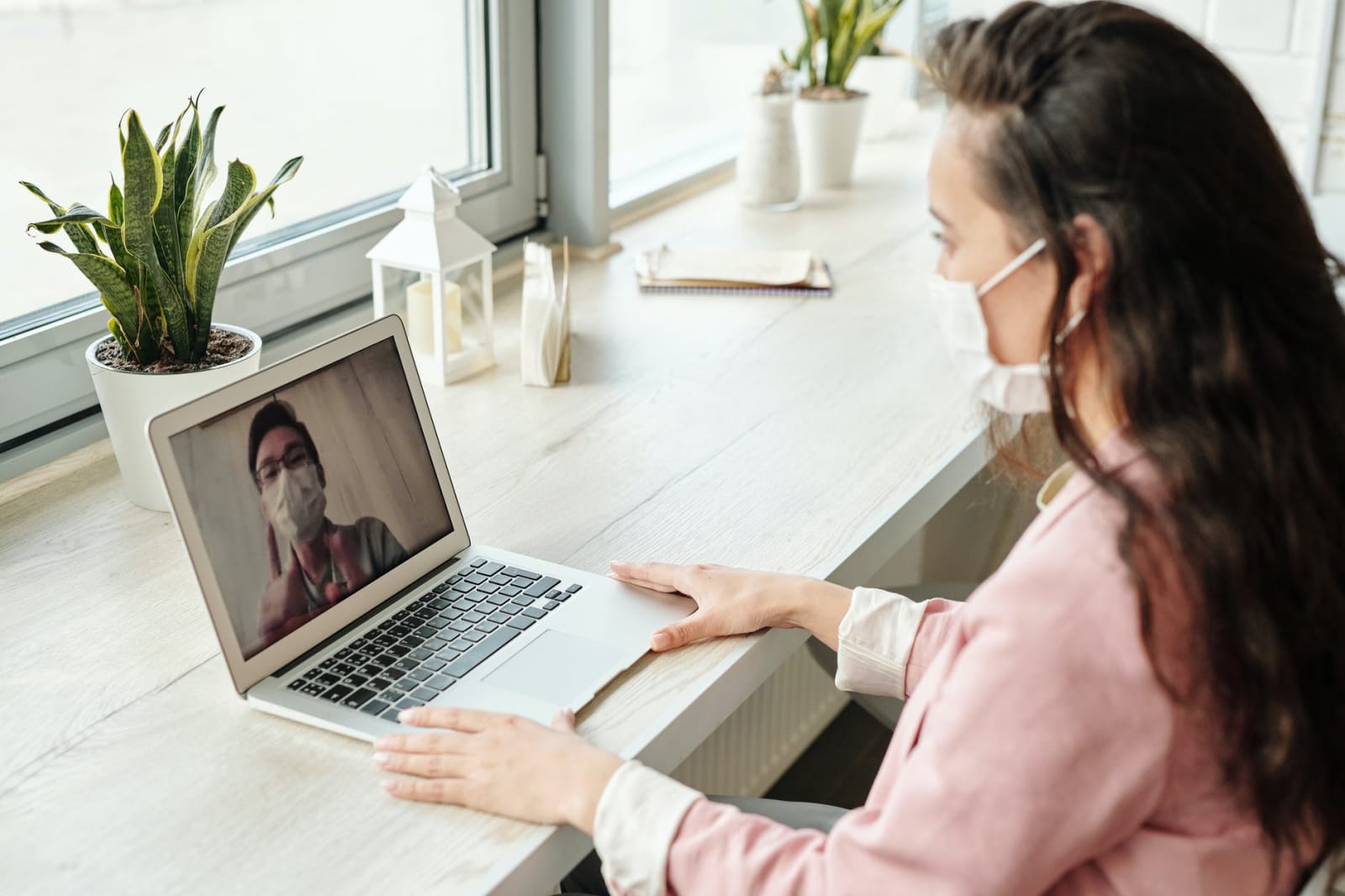
Indeed, at first, remote communication became a harsh test for both managers and ordinary team members alike - no one knew exactly how to behave, what schemes to use. Therefore, all remote work tools were simply field tested - and in practice what worked and what did not work was investigated and adopted (or rejected).
The main problems were:
- motivation and how to keep it not only alive but revitalized;
- planning and how to organize individuals with personal comfort-zones and habits in one powerful workforce;
- communication and how to find a happy suitable medium which way to chat, when and how long;
- performance marks and how to measure KPI and amount of “self-discipline”;
- team’s ardor and how to sustain and re-kindle it;
Painkillers
The most labouring was the organization of communicating processes. Two-faced problem: people in cozy home surroundings that should be behaved with as if in an office conditions. And all this bunch in pajamas so to say should be directed to total productivity. Challenging task, isn’t it? But nothing is impossible as is known.
Representatives of different business areas think that lockdown equelled to reformatting algorithms and rebooting.
So let’s see what painkillers they propose in this never-before-seen remote work conditions:
- Digital technologies
- modern resources provide access to all the necessary materials and workspaces anytime, anywhere. There is no need to visit an office to get access to the required data. It was this work with cloud-storage data that made it possible to show stable productivity results in a remote co-working mode.
- So much so that some companies have decided to move away from the traditional methods of working in a crowded offices and move in online spaces for good (namely Twitter, Shopify, Facebook, Microsoft, Amazon - all of which completely or partially gave a free liberty of choice to their employees to work from home and after lockdown)
- Flexible working
- more than 89% of various employees indicated that no-fixed working hours were a key factors in their productivity boost
- Communicational tools
- even before the outbreak of the virus, the world of virtual communications could boast of more than one useful application for group communication, video calls, conferences and just chatting. With the introduction of quarantine measures, these applications only evolved. Plus, new names on the market have joined them as a predictable response to ever-increasing demand.
- This variety of tools readily fulfilled all professional needs and satisfied a wide range of financial capabilities of longing teams.
- Real helpers in enabling smooth workflow were (and continue to be) Zoom, Hangouts, Skype, Facebook Messenger Rooms, Discord, Microsoft Teams.
- Engagement level
- highly engaged employees have a 21% increased level of productivity. Digital workspace brings interaction to a whole new level.
- Group chats, questionnaires, polling on a product, video communication - all this forces you to participate in the process in one way or another. And if in a traditional office life, only activists came to the fore, then in the network almost everyone was equal - everyone contributes to the development. And if earlier any of the employees could hesitate (or shy) to express their opinion, then, as the practice of remote work has shown, in an online mode such employees take an active part in making all sorts of decisions.
- It turned out that lockdown forced colleagues to communicate more and thus feel the deeper engagement.
And how specifically designers have coped?
A designer is a creative kind of a profession, and therefore it was comparatively easy for designers to adapt to the new conditions of remote work. All the same tools of online communication and friendly media chats helped to work in a team and keep up with all the nuances of the current workflow.
But some teams went further ahead and cultivated some interesting approach to making an office-like atmosphere at homes. Here are some maybe unusual, but effective examples:
- reproduction of office sounds
- designers, albeit creative people, but are people of habit all the same. Sometimes, for inspiration, they need to recreate the usual working conditions and everyday environment (sounds of a working printer, hum of voices or mouse clicks). Here we were advised to look for office hum and noises
- lunchbox cuisine
- some designers recreated the atmosphere of the office with the help of food and ate from lunch boxes, as was usually done in the office before lockdown. It sounds a little unusual, but the method works, as we were told. Anyway they are designers, creative folks with their own whims, aren’t they
- tea time
- another way to mental trip into the office walls - it’s literally to feel the familiar taste in a cup. Some remote workers, in order to keep in touch with the place of work, bought brands of tea and coffee that they used to drink during working hours in office coffee-rooms
- virtual office
- it was said to be a very effective method for maintaining self-discipline All team members turn on their webcams, access the network through virtual conferencing tools, and everyone works in their home office as usual (being able to observe and keep in touch with colleagues)
- lounge rooms
- many designers interviewed believe that creating "smoking rooms" and "lounges" online is a very effective method of maintaining a working spirit and mood. The most popular app turned out to be Slack, where teams created chat rooms where they could share everything from funny pictures to diet donut recipes. Everyone felt involved and stayed aware of the mood of their colleagues.
First hand experience
Of course the theoretical part is an interesting one, but what about a real-life experience? We questioned some specialists from the design world about their lockdown challenges and here what we had.
We live in a very interesting time when we do not need to be in the same room or even country to work together as a team, but teamwork doesn’t happen naturally, it needs to be set up for success. Whenever I work in a remote mode I take time with my team or client to set up a successful plan for communication. Today we are so spoiled. We have great online tools we can use for brainstorming, set up multiple hour calls to work together and mimic a sense of being in the same room and task boards that let us plan our day more efficiently than ever. I also think that there is a bit of a charm with working remotely. We let our teams and clients into our homes, they see our living room or kitchen table, in my case hear my dog barking and I see that as a layer of imperfection that makes us more relatable and more human.
How do you interact and cooperate if working in a remote mode?
Liva Grinberga
Lead Designer @MediaMonks
Video conferencing helps. Sometimes we might run workshops. We also make lots of prototypes, because you can create as much documentation as possible but nothing gets an idea more sizable than a prototype. It can help you discover things you didn't even think of. That said, it can be challenging because nothing beats being in the same room. But we manage to make it work. I am lucky because I work with a really talented team.
How do you interact and cooperate if working in a remote mode?
Mustafa Kurtuldu
UX-designer at Google
2020 has been a weird year that has thrown up some unique challenges. In particular, I spend a lot of my time helping businesses better understand their customers, and one way I do that is through customer journey mapping. However, this is something that involves face to face workshops, something COVID-19 has made impossible. While some people have proposed replicating the workshop experience online, I have taken a different approach, seeking to get the same results, but approaching it differently. I have therefore spent the last several months exploring ways to create customer journey maps without direct contact with the user or stakeholders through surveys and data analysis. It has been an exciting challenge.
What catchy problems did you face when working in the 2020 lockdown, and how did you solve them?
Paul Boag
User Experience Consultant, Conversion Rate Optimisation Specialist
Fixing the results of the day. I voiced this proposal as a task that everyone does for himself, but writes the answer in the general chat. Every evening at 7:00 pm, we record our completed tasks and rate our productivity on a 10-point scale. This technique allows everyone to realize the amount of work done, as well as to think about whether the person was as productive as possible and, if not, what was the reason.
Which methods of performance measurement did you use during lockdown?
Zdravcheva Katerina
Lead designer at WebX.page
In the wake of pandemic
After lockdown we confronted the so-called era of “new normal”. All previous ways of communication were revised and some of them will stay for good and that is an innovative reality.
Collective intelligence formulated the basics that played out in fresh colors:
- communicate in any situation with team members and clients alike;
- use several channels simultaneously for your communication;
- constantly support social media - clients should see your activity;
- online services came to an unprecedented prominence and such tendency only strengthen with time - one should reconsider old strategies and adapt;
If we talk about designers’ skills specifically and the era of a pandemic, it should be noted that they certainly did not sit idling. Their operational aspect is such that even being in a remote work mode it was absolutely possible to engage in ambitious projects.
WebX.page sitebuilder team of designers is a perfect example of productive collaboration during and after pandemic. They’ve been sparking creativity through many templates, creating and renovating site designs and exceptional logos. Wanna dive into graphical diversity? You are always welcome!

Yana Kropova is a content marketer at sitebuilder WebX..