Comparing DesignCrowd vs 99designs may look like an easy feat at first glance since these two design crowdsourcing platforms appear essentially the same. Unfortunately, it isn't the case. You may need to spend a substantial amount of time scrutinizing each platform to identify the real differences. It also means spending money to find out which of these platforms is better. You may, of course, need to sign up for both services and have your logos designed so you can determine who could give you more professional results according to your standards.
Fret not. We've done it all for you! We also tried to introduce a better alternative - Delesign, if you feel they do not offer the exact kind of service or approach they offer. All you need to do is keep on reading to find out who won the race.
DesignCrowd vs 99designs: Main Selling Points
Both platforms are the go-to digital places for businesses looking for graphic design services for their logos, websites, and other print materials. 99designs bills itself as the largest digital marketplace for graphic designs across the globe. It boasts of over 1.5 million freelancers in its community. As of this writing, this crowdsourcing platform has already helped nearly 400,000 businesses in their various marketing materials and has paid about $200 million to designers. Its site attracts more than 4 million monthly visitors.
DesignCrowd, on the other hand, has a community of over 600,000 multi-cultural designers. It boasts of its "Crowdsourcing 2.0" platform model that offers quality designs at more affordable prices. It also ensures each designer gets their pay fairly for their efforts.
DesignCrowd vs 99designs: Similarities
These crowdsourcing platforms make it easier for clients and professional designers to work together. They host contests for the designers whose primary expertise is in creating web, logos, and other graphic designs. They guarantee prize money for the winning designer. Both follow the same process, from attracting customers to paying the designers. Here's how they work:
- A client fills out a design brief that details the project's specifics, timeline, and budget.
- The client may open a contest and guarantee prize money. This will oblige the client to buy at least one of the designs submitted. On the other hand, doing so will attract more designers as they know they will be rewarded for their work.
- Interested designers may submit their designs to the client's account.
- The client chooses the best among all the submissions.
- The winning designer gets the prize money.
- Alternatively, a client may invite some designers to submit their work to you personally.
DesignCrowd vs 99designs: Main Differences
As mentioned above, the two platforms offer a win-win solution for both the clients and graphic design. So, where does the difference lie? Below we listed the differentiating factors:
Categories
Video and animation categories are lacking in the DesignCrowd.
Designs
You can expect 99designs to deliver high-quality designs over the other. This can be because the design form that clients of 99designs fill out for the brief would ask for more detailed information. It also comes with a wide range of design and color choices to help the designers get better ideas about your overall preference. DesignCrowd, on the other hand, provides one-page briefs.
Check out photos for comparison:
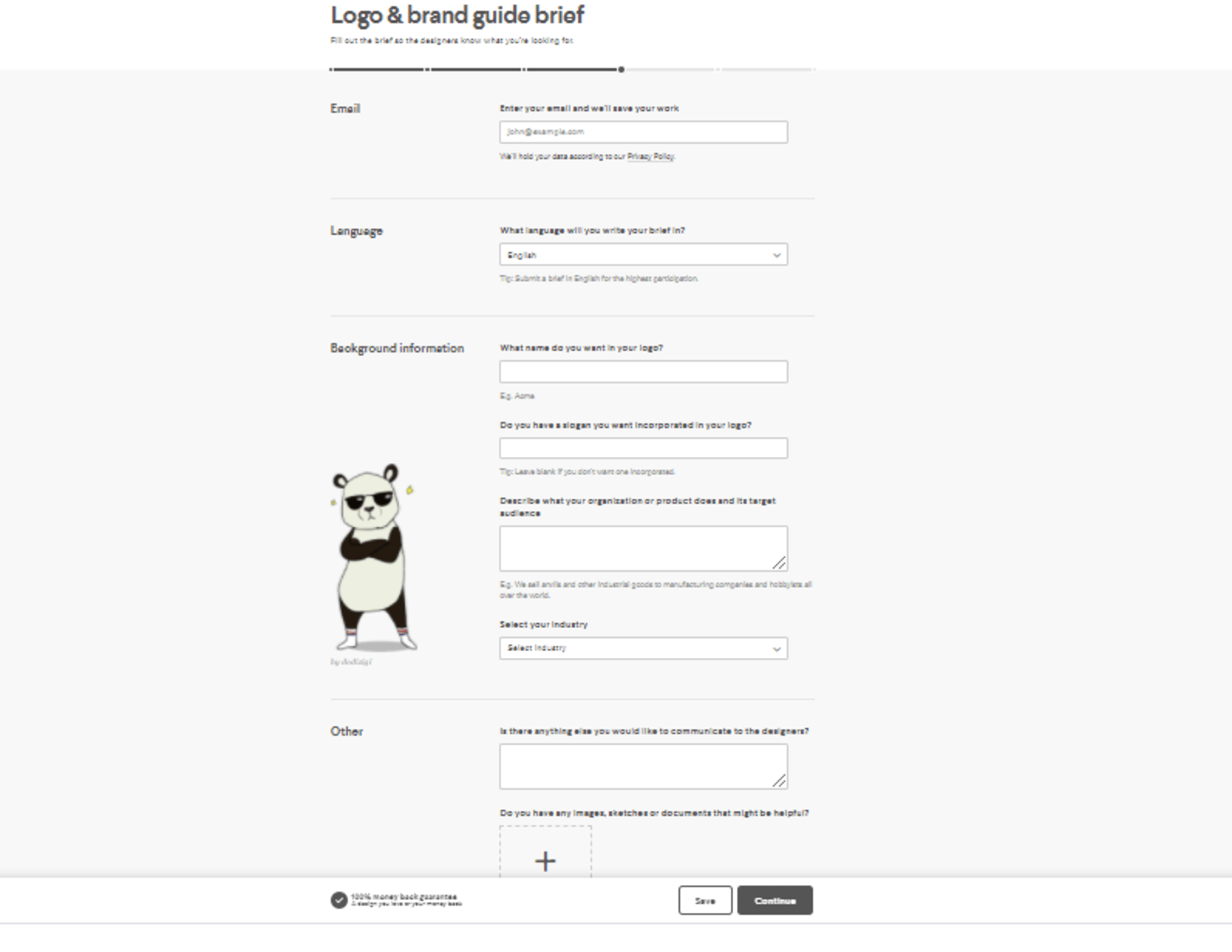
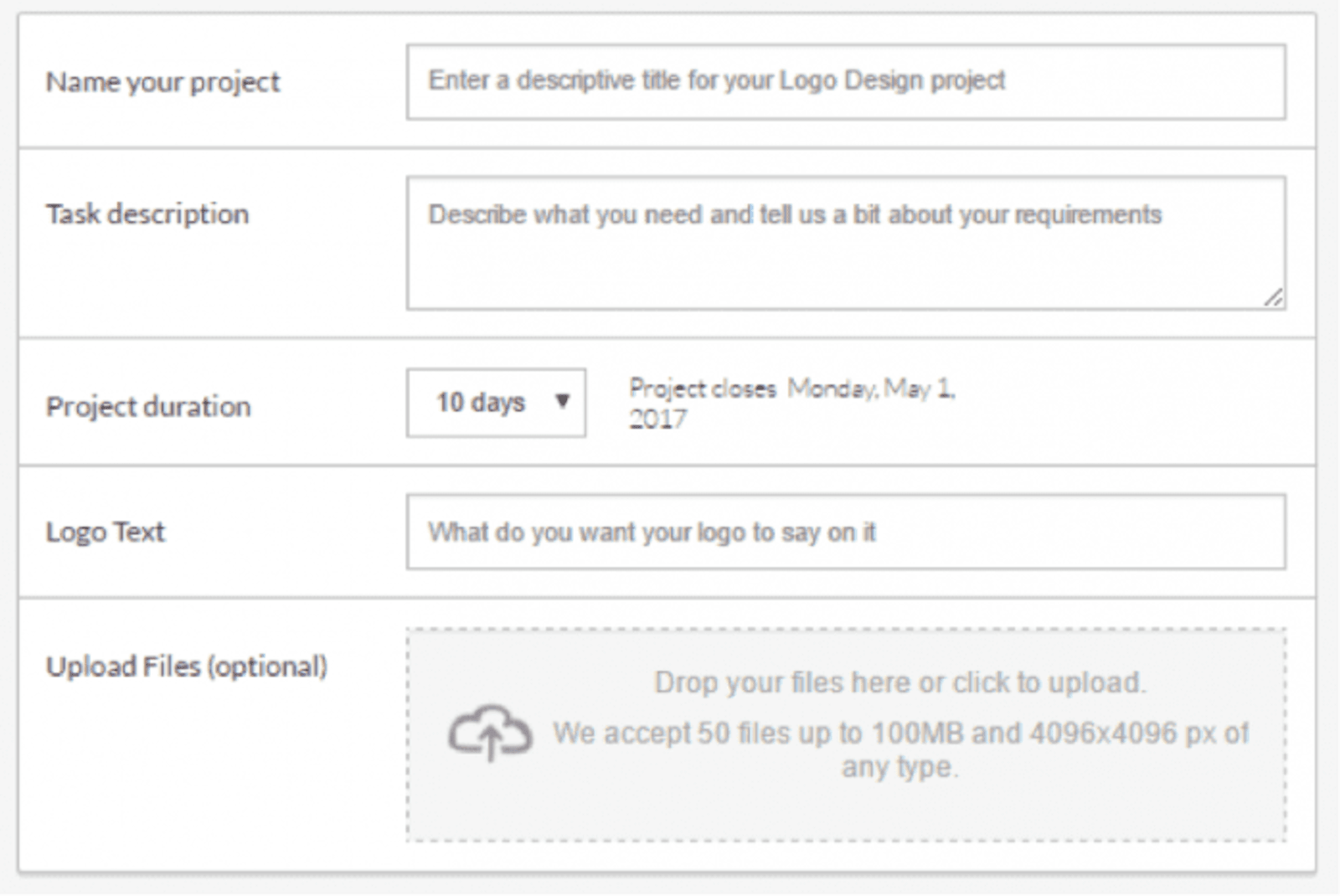
More detailed information about your project will encourage designers to produce better results. Communicating well with the designers at the initial phase, for example, could spare your designers from the hassle of figuring out what your vision exactly is. This means a lesser turnaround time.
Pricing
In the battle between DesignCrowd vs 99designs, both crowdsourcing platforms enable clients to choose packages at various price points with an additional charge for every extra feature. They also both offer money back guarantees in case clients are not satisfied with the result. In most cases, however, 99designs is costlier by about $60. Pricing package for designing a logo, for instance, could only cost as low as $99 to $699 in DesignCrowd. Whereas in 99designs, prices could go from $299 to $1,299.
Nonetheless, remember that comparing platforms based on pricing can be quite tricky. DesignCrowd maintains lower prices to attract clients on a tight budget. It works on the principle that clients receive more design submission, the more they pay. That applies regardless of the efficiency of the designer. The main downside, however, is that they only have a limited pool of designers.
Hence, most online reviews would recommend 99designs since they have a larger community of designers if you got the money. This could explain why they are costly, even ranking among the most expensive options in the market. Their pricing model ensures you attract the best designers to participate in your contest, instead of merely hoping they take notice of your brief. Their costly package suggests the participation of top-rated designers in your contest. This consequently means that you can always expect high-quality submissions.
Contest Process
As discussed earlier, both platforms follow a similar process in conducting contests. No wonder some people presume they are just basically the same. Unfortunately, they're not.
While both offer direct hiring of designers for projects, 99designs emphasizes working on designers as DesignCrowd focuses on design contests. With DesignCrown, clients only have to complete a one-page brief and wait for submissions from designers worldwide. They then have to choose their finalists and iterate upon it until they are completely satisfied.
On the other hand, 99designs enables clients to communicate with designers who have submitted their entries. They can also request a free consultation before committing to anything. The platform also provides a dedicated project manager in its premium plans to help them out during the entire process and ensure quality. Clients also get the chance to choose from varying payment plans that become costlier depending on the number of submission requests and access to higher-tiered designers.
With DesignCrowd, clients are not guaranteed access to high-quality designers as they are on the same playing field in general. Clients set their budget, and hence, annual or monthly plans are not available.
One of the things that draw clients to 99designs is the benefit of canceling your contest anytime, even before you choose the winner and get a full refund of your money. This means that all you have lost is the amount of time you spent conducting the contest, which is a straightforward process anyway. The money back guarantee of DesignCrowd, on the other hand, is quite misleading as it excludes posting fees.
DesignCrowd vs 99designs: So, Which Platform Won?
Based on the above differences and online reviews you can read everywhere, 99designs clearly wins over DesignCrowd. They can be the costliest in the market, but most businesses appreciate their designs and approach. However, if you are searching for the best deals without sacrificing the quality of designs, consider Delesign.
This California-based company offers a unique approach to plans and pricing options. It provides two non-tiered plans, meaning their costs are the same regardless of how small or big your project or business is. Moreover, its subscriptions are classified as either 'Day Plan' or 'Night Plan' depending on the scope of the working hours based on the standard Pacific Time. Each slot allows for two hours of design allotment daily. This suggests that you are assured that there is a designer readily available to work for two hours during your business operating hours. Consequently, you can expect a faster turnaround within 24 hours for every design task you requested.

Maria is a Content Writer with keen interest in eCommerce and Internet Marketing. She is a Communications graduate and understands what it takes to write persuasive copy and blog posts. Outside of work, you can find her mini-blogging about her life on social media.