Almost every industry today is on social media, and the medical field is no exception. When seeking health information, 40% of healthcare consumers say they use social media. Thus, it's no surprise that healthcare social media marketing is on the rise.
QuantiaMD surveyed more than 4,000 physicians, and 65% use social media sites for professional purposes. Social media and healthcare marketing go hand in hand in informing the patients and for the physicians to connect with them. The sharing of medical information online is where there are opportunities to use social media.
How Is Social Media Used in Healthcare?

Social media marketing in the healthcare industry has various purposes. Whether you're a doctor, a clinician, a surgeon, or a hospital staff, healthcare social media marketing has benefits.
Sharing accurate information
The Telegraph reports that about 70,000 Google searches every minute are related to health. With more people searching in Google for their symptoms, it's easy to spread misinformation about their diagnosis. As a healthcare professional, one way to counter this is by providing accurate information. You have to share facts that correct their way of thinking.
Addressing health policies and malpractice issues
The government implements necessary laws to ensure the health of its citizens. Social media is a powerful tool to discuss these regulations. Your opinion as a medical practitioner will help patients and public officials to come up with better decisions.
Healthcare providers maintain a high level of integrity in the work that they do. In cases, however, when medical malpractice happens, it's crucial to address what went wrong. Using social media to communicate will keep patients from generalizing based on a particular, isolated case.
Promoting health behaviors
People want to be healthy and avoid being sick whenever possible. A better way to promote proper health habits is on a social media platform. As a medical practitioner, you can encourage the general public to be more mindful of what they eat, be fit through exercise, or follow a proper and safe health regimen.
Patient education
Some individuals go to great lengths to take care of their health. Intending to be healthy, they follow fad diets, do unsafe workout routines, or even take fake supplements. Now, this is where healthcare professionals come in. You can use social media to educate patients about health concerns and raise awareness about the right way to be healthy.
Engaging with the public
Using social media is one way to interact with your patients and the general public. If they have any questions or doubts about their health, a simple, brief response will make them trust more in your practice.
How Has Social Media Influenced the Marketing of Healthcare?

60% of people trust social media posts from doctors or hospitals. Therefore, social media influences people's decisions about healthcare. A social media channel works well to establish your reputation in your practice.
Having regular updates on a social media channel is an effective and organic way to market your healthcare service. The infographic from Demi & Cooper Advertising and DC Interactive Group shows how social media affects the public's perception of a healthcare provider. 41% of research respondents say that social media affects their choices of a specific doctor, hospital, or medical facility. Through social media marketing, you can build relationships with healthcare consumers.
The rise of telehealth is also worth noting in the healthcare industry. In 2019, the global telehealth market value was around $61.40 billion and will reach more than $500 billion by 2027. With the development of online consultations, it's all the more important to have an outstanding social media presence to complement your marketing.
Best Practices for Implementing Social Media Tools for Health Marketing

With the several benefits that social media provides for marketing healthcare services, you also need to keep in mind how to use the platforms properly.
1. Choosing a channel
With so many social media channels to choose from, you have to choose which among them will be more active. Ideally, you would have more than one social media channel. The main channel that you choose will be your key source of updates.
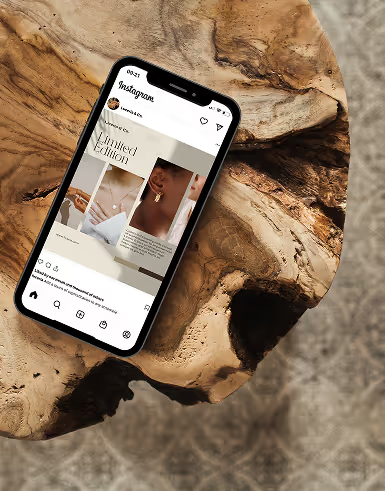
For instance, a YouTube channel might be more appropriate if you need to explain medical terms in a simple, straightforward video. Instagram marketing for doctors is another example of reaching out to health consumers active in the platform.
Vary content
While you may have a specialty in the field of medicine, your social media content doesn't have to focus only on your practice. There are other relevant topics about health care that you can also incorporate.
Niche communities
Engaging with a specific group of people who needs your professional advice is an effective way to market your practice. Facebook groups are a prime example of people who are concerned about a particular health topic. On Twitter, you can also search for relevant hashtags and interact with healthcare consumers who can be your potential patients.
Consider paid options
Like any marketing tool, social media also provides you with paid options. Investing in paid healthcare social media marketing helps you promote a new healthcare service, for instance.
What Is Required for Social Media Marketing?

If you're ready to get ahead with healthcare social media marketing, have the right planning so you can effectively use the channels.
Identify goals
Social media has several uses, depending on how you want to market your healthcare practice or institution. The importance of having an online presence is to have a goal first. Some questions that will help identify your objectives are as follows.
- Do you want to have more patients?
- Provide an avenue to interact with them?
- Establish your reputation in the medical field?
Setting a goal in social media presence provides a direction on how you will approach your posting.
Ideal consumers
Have a target market in mind in which the tone and voice of your social media will best appeal to their persona. If you're a pediatrician, for example, you need to know how to communicate with parents and their children. Communication via an online channel is different than in person. Thus, you need to be aware of the social media language of your ideal healthcare consumers.
Diversify channel
Different social media platforms provide an avenue depending on the intended use. However, you don't have to limit to just one channel. You can divide your time to be more active on Twitter for snippets of information, then have official announcements on Facebook, for instance. What matters is you have a social media presence in more than one channel to reach more people.
Competition research
Researching other medical practices will give you an idea about current health trends and topics. Set a standard for your healthcare social media marketing by benchmarking against how competitors do it well and avoid posting mistakes.
Content strategyContent strategy
Another rule to follow in healthcare social media marketing is a well-thought content strategy. Have a scheduled posting ahead of time with varying social content. Each post that you make must be presentable and understandable so that patients and the public can engage.
Healthcare social media marketing is about initiating a social conversation. As medical topics are a matter of one's well-being, you have to post appropriate content in your social media feeds.
One way to interpret correct health information is to have content that's easy to understand. With the aid of graphics and visual imagery, you can translate complex health topics into a digestible format. Though, the design is understandably not the skill of a medical practitioner. You will need to hire third-party graphic designers, full-time staff, or a healthcare social media agency.
If having an additional employee solely for design duties isn't a viable option in your medical practice, some services can take on the job. Among them is Delesign, a third-party provider for all your design needs.
With Delesign, you don't have to think about design costing and estimates. The flat monthly pricing allows you to request an unlimited number of designs and revisions. Social media marketing for healthcare professionals and organizations is effortless with Delesign. A dedicated designer will work on your social media visuals so you can focus on providing better healthcare service.

Raffy is involved in SEO and digital marketing. He gravitates towards upcoming technologies, startups, and is an avid learner.