Here's something most designers don't realize: accessibility isn't just the boring legal stuff you deal with after creating something beautiful. It's the secret weapon that makes your designs work harder and reach further. In 2026, professional graphic design means creating visuals that speak to everyone, including the 1.3 billion people globally living with disabilities. And here's the kicker: when your branding design is truly accessible, it performs better, ranks higher, and connects with more people.
The Accessible Canada Act is expanding, AODA compliance reporting hits December 31, 2026, and WCAG 3.0 is reshaping the game, but this isn't about checking boxes to avoid fines (which can hit up to $100,000 per day - yikes!). Want designs that look amazing AND reach your entire audience? Discover how Delesign's unlimited graphic design services bake accessibility into every project from day one.
The 2026 Accessibility Landscape: New Standards and Legal Requirements
WCAG 3.0 is rolling out this year with a scoring system that measures how design choices affect various disabilities. Your colour contrast checker is still important, but now you need to think bigger picture.
In Canada, the Accessible Canada Act (ACA) requires federally regulated organizations to hit WCAG 2.0 Level AA standards by June 2027/2028, with penalties from $250 to $75,000 for non-compliance.
The big one for Ontario? AODA requires organizations with 50+ employees to ensure websites meet WCAG 2.0 Level AA. Your next compliance report is due December 31, 2026, with potential fines up to $100,000 per day for corporations. Manitoba, Nova Scotia, BC, and Newfoundland have similar rules.
Serving European customers? The European Accessibility Act applies to you too, even if you're Canada-based. Good news: most standards align around WCAG 2.1 Level AA.
Here's something cool: search engines and social platforms now reward accessible content with better rankings. Your accessible social media design isn't just doing good, it's getting seen more.
Designing Inclusive Colour Palettes and Visual Elements for All Users
Let's talk colour. While it's one of the most fun parts of graphic design for business, it's also where accessibility issues hide. Roughly 300 million people worldwide experience colour vision deficiency.
Colour contrast isn't just about meeting the minimum 4.5:1 ratio. Smart designers push for 7:1 because it looks crisp everywhere - bright sunlight, dimmed screens, you name it. Modern design tools now have real-time contrast checkers and AI that shows exactly how your design appears to people with colour blindness.
Designing for colour blindness actually makes your designs stronger. Skip red-green combos. Not only is this combo a struggle for those with colour blindness, but to those who can see colour more typically, it nearly always reads “Christmas.” Try blue-orange pairings, add patterns alongside colour, and make buttons do more than just change colour. A great "Submit" button might scale slightly, add a checkmark icon, or update its text, not just flip from grey to green.
Here's the magic trick: layer your communication. Instead of only a red error message, combine colour with an icon, smart positioning, and clear text ("Oops! Email address needed"). The same goes for infographic design. If your chart only uses colour for data points, you're leaving people behind.
The beautiful irony? When you create marketing design materials with accessibility in mind, everyone benefits. High contrast looks professional. Multiple visual cues reduce confusion. Inclusive design becomes simply better design.
The Business Case: How Accessible Design Expands Your Market Reach
Let's get real about the money side of accessible graphic design for business.
Those 1.3 billion people with disabilities control over $13 trillion in annual spending power. Add aging populations, temporary disabilities (ever try using your phone with a broken arm?), and everyone who benefits from accessibility features (think of captions in noisy coffee shops!), and you're talking massive market expansion.
71% of people with disabilities will abandon difficult websites for competitors. But 86% of all consumers say they're more likely to trust brands that prioritize inclusion. Your graphic design for business sends messages before anyone reads a word.
SEO loves accessibility. Search engines eat up accessible content because it's structured and easy to understand. Proper headings, alt text, semantic markup, it's all SEO gold. Same with social: posts with alt text get better engagement. Your accessible social media design is algorithmically savvy.
With that December 31, 2026 AODA deadline looming and six-figure daily fines possible, investing in professional graphic design that gets accessibility right costs way less than legal fees and reputation repair.
Bottom line: accessible unlimited graphic design grows your market by 16%, boosts SEO, builds loyalty, and keeps lawyers at bay. With a graphic design subscription model, accessibility becomes your default setting.
Implementing Accessibility Standards in Your Design Workflow
You don't need to become an accessibility expert overnight. Just build it into how you already work.
- Start with a reality check. Run designs through tools like WAVE or Axe. Test with screen readers and colour blindness simulators. Understanding your starting point makes everything easier.
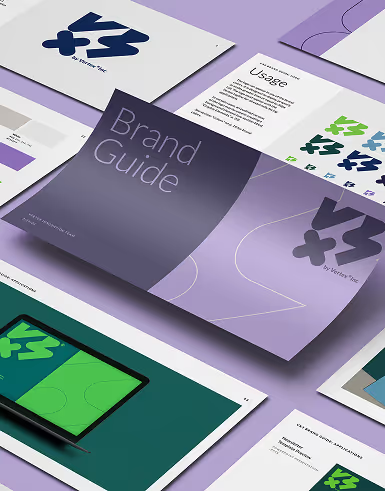
- Create your accessibility playbook. Build a brand guide with pre-approved colour combinations, verified contrast ratios, and typography that works. Document what makes your designs work for everyone.
- Make it part of the brief. Add accessibility requirements alongside aesthetic goals. "Meet WCAG contrast standards" should sit next to "match brand personality." When it's in the brief from day one, it's just part of creating great work.
- Get real feedback. Automated tools are great, but test with people who use screen readers or navigate with keyboards only. Their insights teach you things no software can.
- Keep iterating. As your branding design evolves, so should your approach. A graphic design subscription with unlimited revisions lets you test, learn, and improve without watching the meter run.
Creating Accessible Graphics at Scale with Delesign
Creating one accessible graphic is doable. Creating hundreds while maintaining quality, brand consistency, AND accessibility? That's where unlimited graphic design services change the game.
At Delesign, our professional graphic design team doesn't treat accessibility as an add-on. It's baked into how we work from the first sketch. Every designer knows WCAG guidelines and thinks about inclusive design automatically. Your branding design reaches everyone without requiring you to become an expert.
The "unlimited" part is crucial. Achieving truly accessible graphic design for business takes several iterations. This entails testing, adjusting contrast, refining hierarchies and more. With unlimited revisions, you can perfect accessibility without stressing about costs. Test social media design templates with screen reader users, get feedback, make changes, test again - all within your flat monthly rate.
We also help you build accessible design systems that scale. Get the foundation right with comprehensive brand guidelines, and every asset automatically inherits those inclusive principles.
Ready to make accessibility your competitive edge? Discover how Delesign's unlimited graphic design services help you create stunning, inclusive designs that reach every person in your audience. With a graphic design subscription that treats accessibility as non-negotiable from day one, you'll build a stronger brand, expand your reach, and show everyone matters. Let's create something both beautiful and accessible!

This blog is about the 2026 Accesibility landscpe.