Have you ever had a bad first experience with a product? Then you probably understand how frustrating a bad customer onboarding process (or the lack of one!) can be.
On the other hand, a great onboarding experience comes with many business benefits, so it makes sense that companies invest time, money, and energy in it.
A killer onboarding process can:
- improve your retention rate;
- help your users better understand your product’s features;
- decrease the number of customer service requests.
The key to a good customer onboarding process is to guide your customers to their first success with your company as with as little friction as possible. This initial experience will help you strengthen your relationship with new customers at a time when it is most fragile.
However, in order to properly onboard your customers, you must first lay down the framework for your customer onboarding process.
Creating an amazing onboarding process shouldn’t be stressful. Below, we have outlined the steps you should take to create an onboarding process that’s tailored to your business needs.
How to design an onboarding process fitted to your business needs
Mapping your customer onboarding journey is a great place to start. You can take each element of a SaaS customer onboarding process and try to align your flow to the industry’s best practices.
1. The signup process
Most of your customers are just testing the waters at this point; they’re not yet convinced they’ll commit to your product. So you should avoid asking for too much information right off the bat. Instead, keep the signup process as intuitive as possible.
If you’re not sure how much information you should ask for, start with the basics and work your way up. For most products, this means a name, email, and password.
There are, however, products that successfully manage to gather more information about their customers right from the signup.
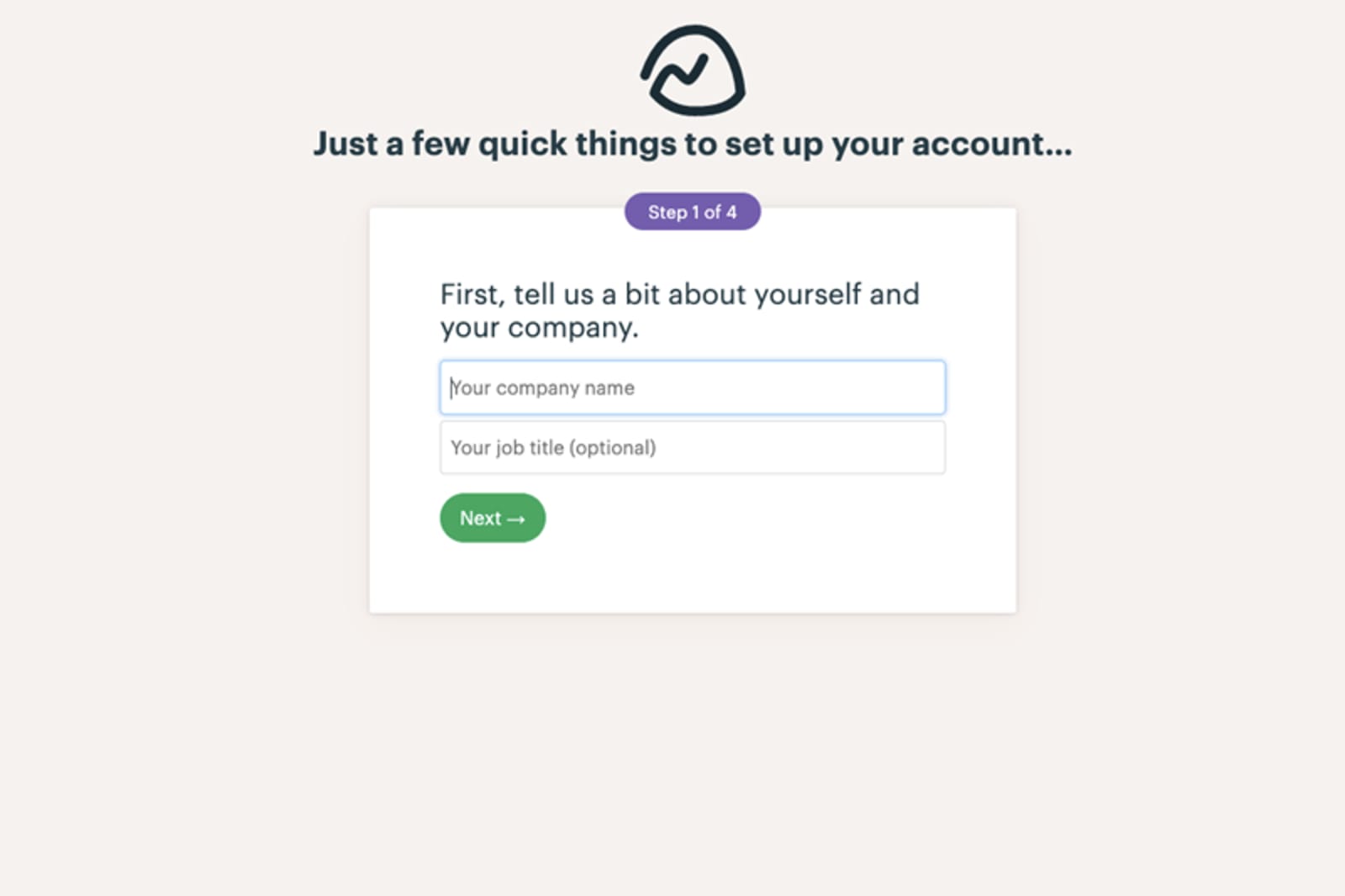
For example, Basecamp uses the signup process to get information that sets up the product. Rather than making a user start from scratch and create their own teams and projects, they offer a selection to choose from during signup. Then, that info is auto-filled as soon as a user completes registration.
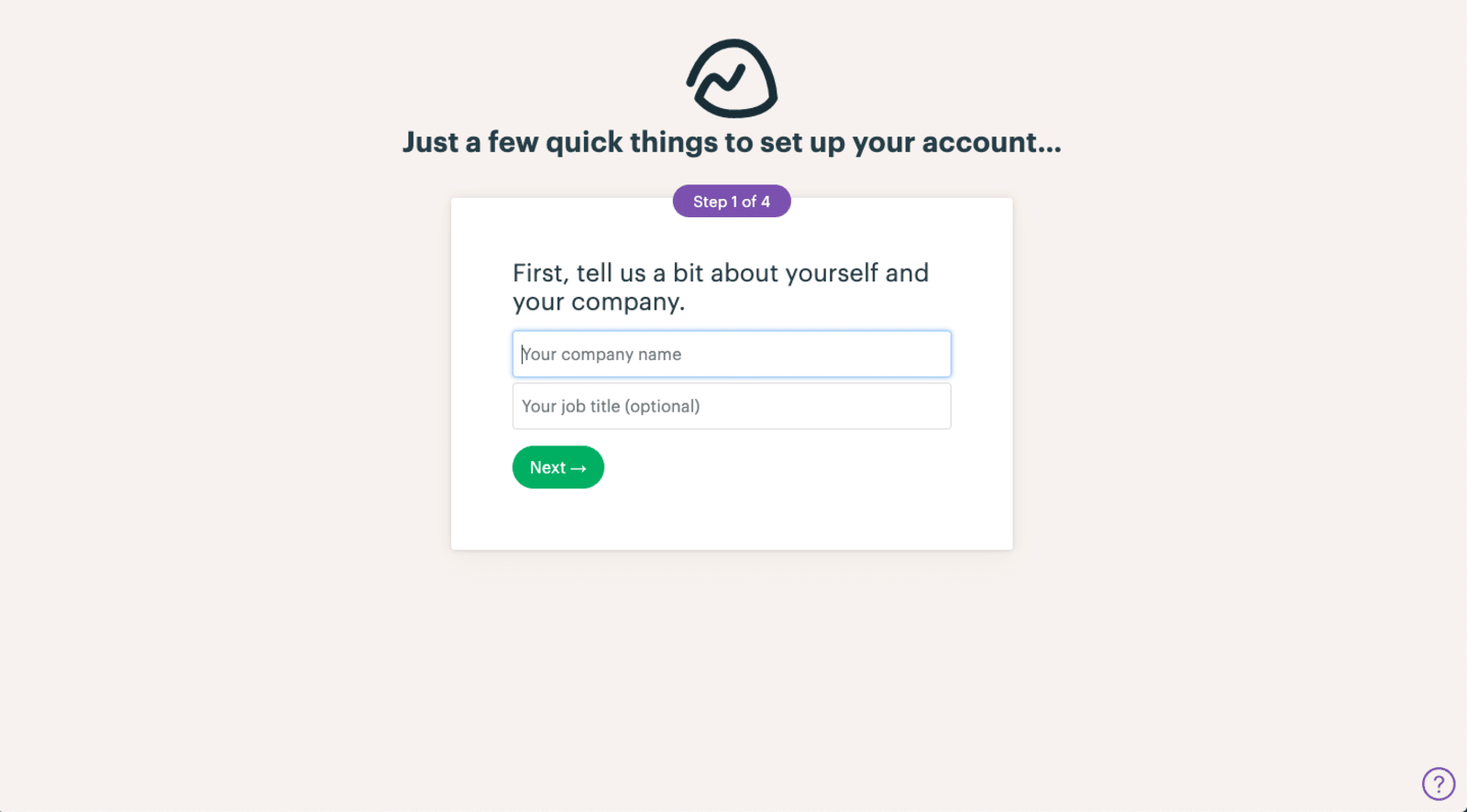
The signup process
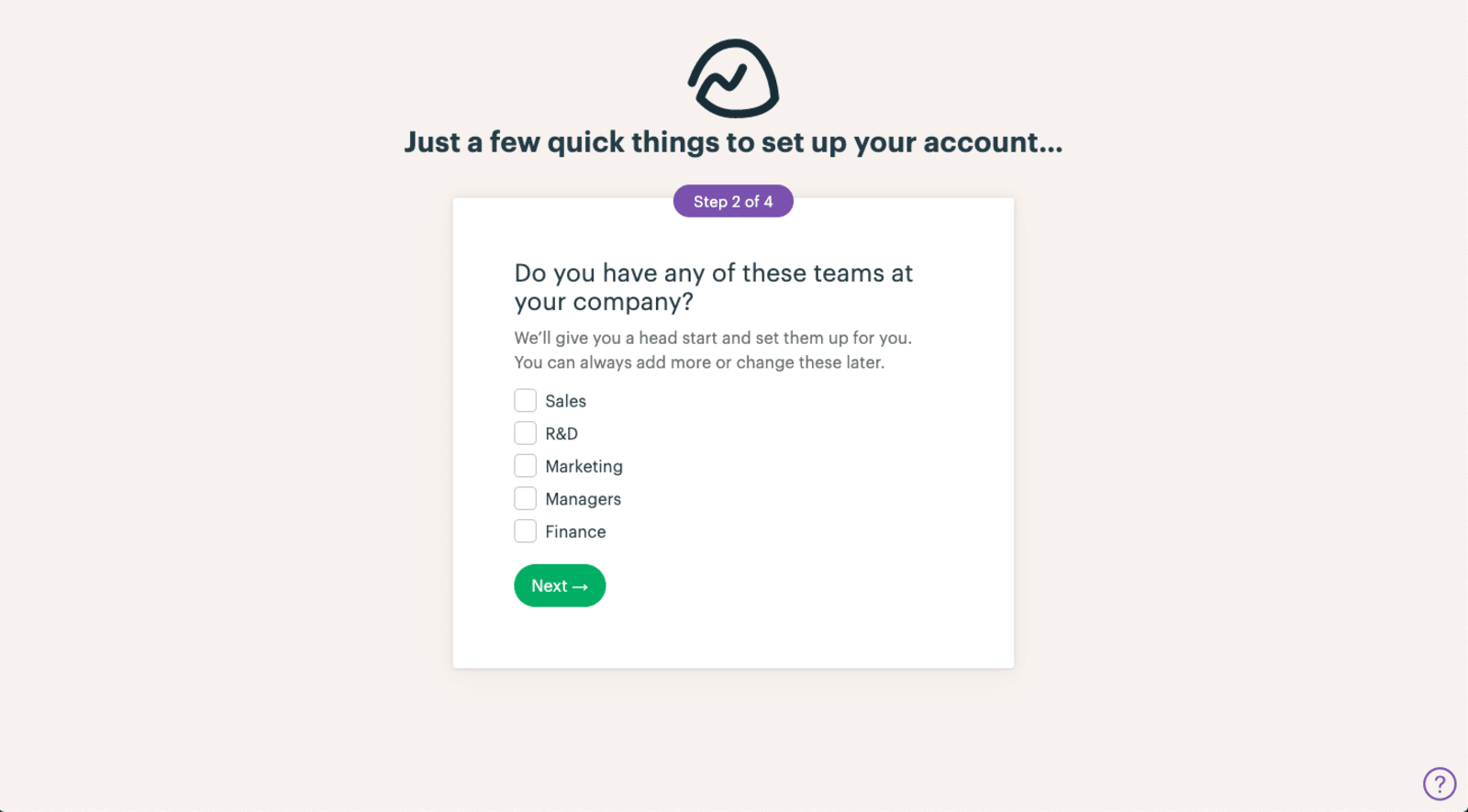
The signup process
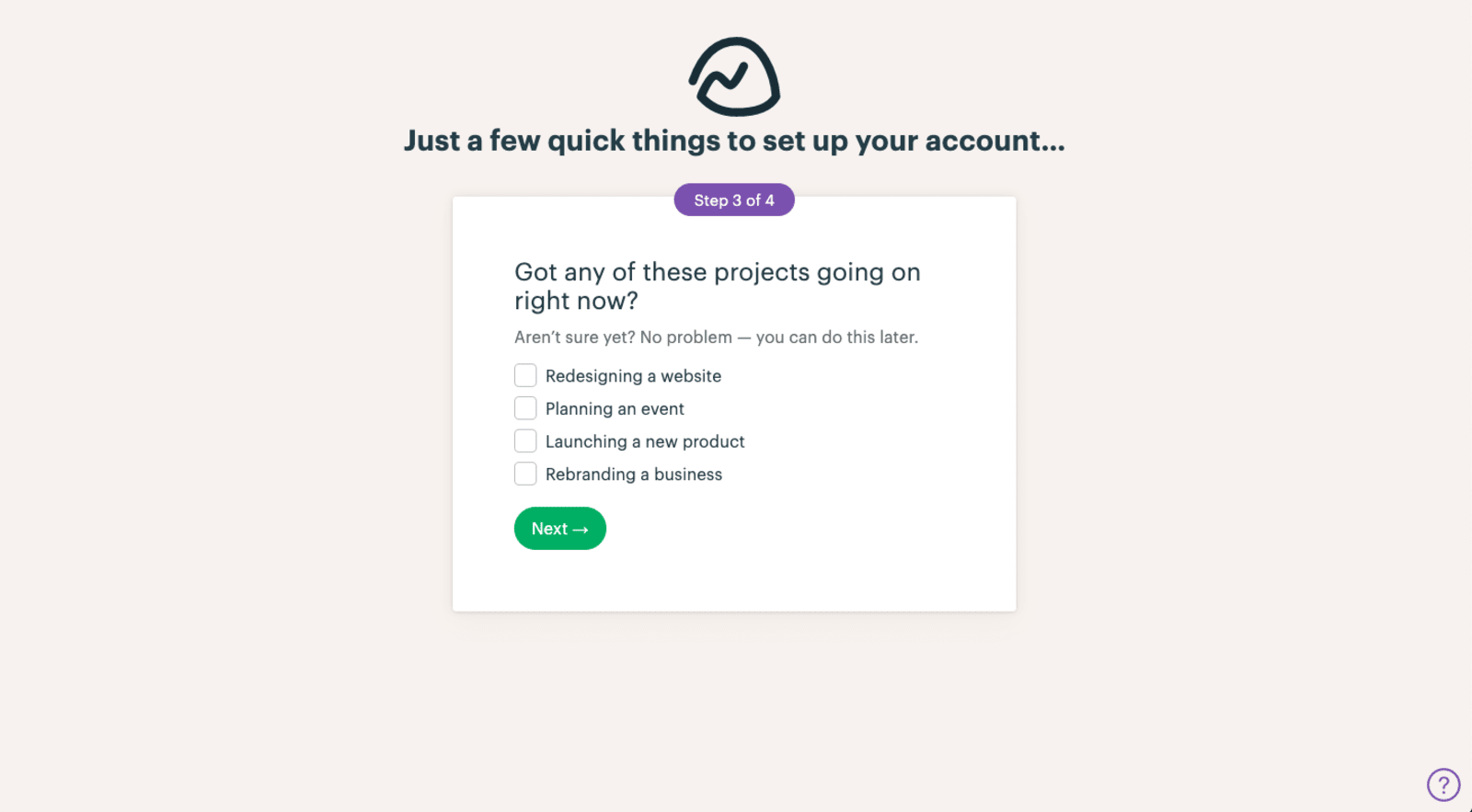
The signup process
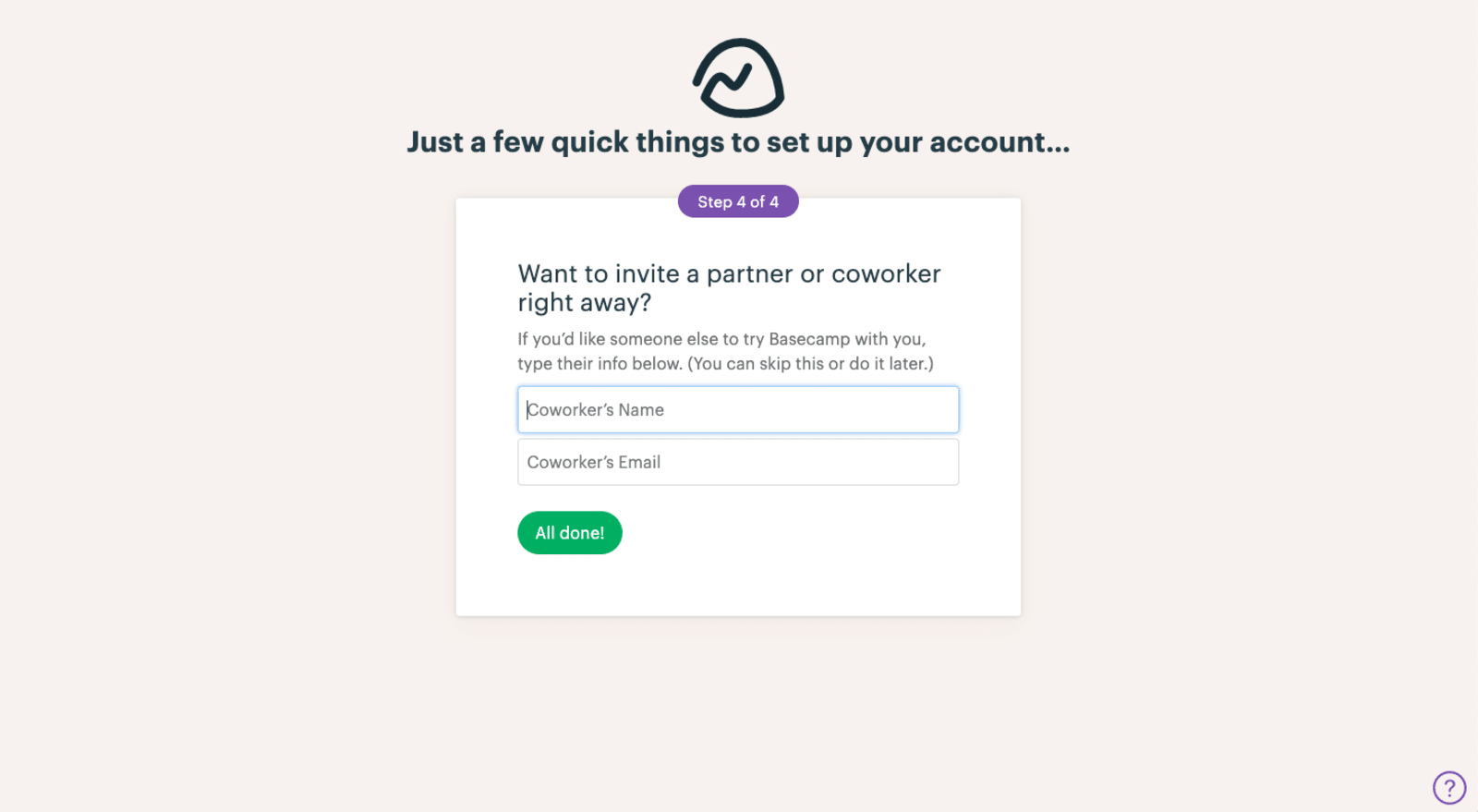
The signup process
Tip: if you notice a major decrease in the number of signups as you start adding more steps, you should stop. You might also want to consider scaling back fields or reducing any back-and-forth steps.
2. The welcome email
As this is the first communication with your customers after they’ve created their account, you should really pay attention to the information you want to pass on. You might be tempted to tell them all there is to know about your product, but that might not be the best course of action.
Instead, welcome your new customer, let them know how happy you are they’re using your product, make it clear that they can turn to you for help anytime they need it, and then encourage them to take the next step.
This can be anything from watching a product tutorial to getting them to add more details to their account to using your product for the first time.
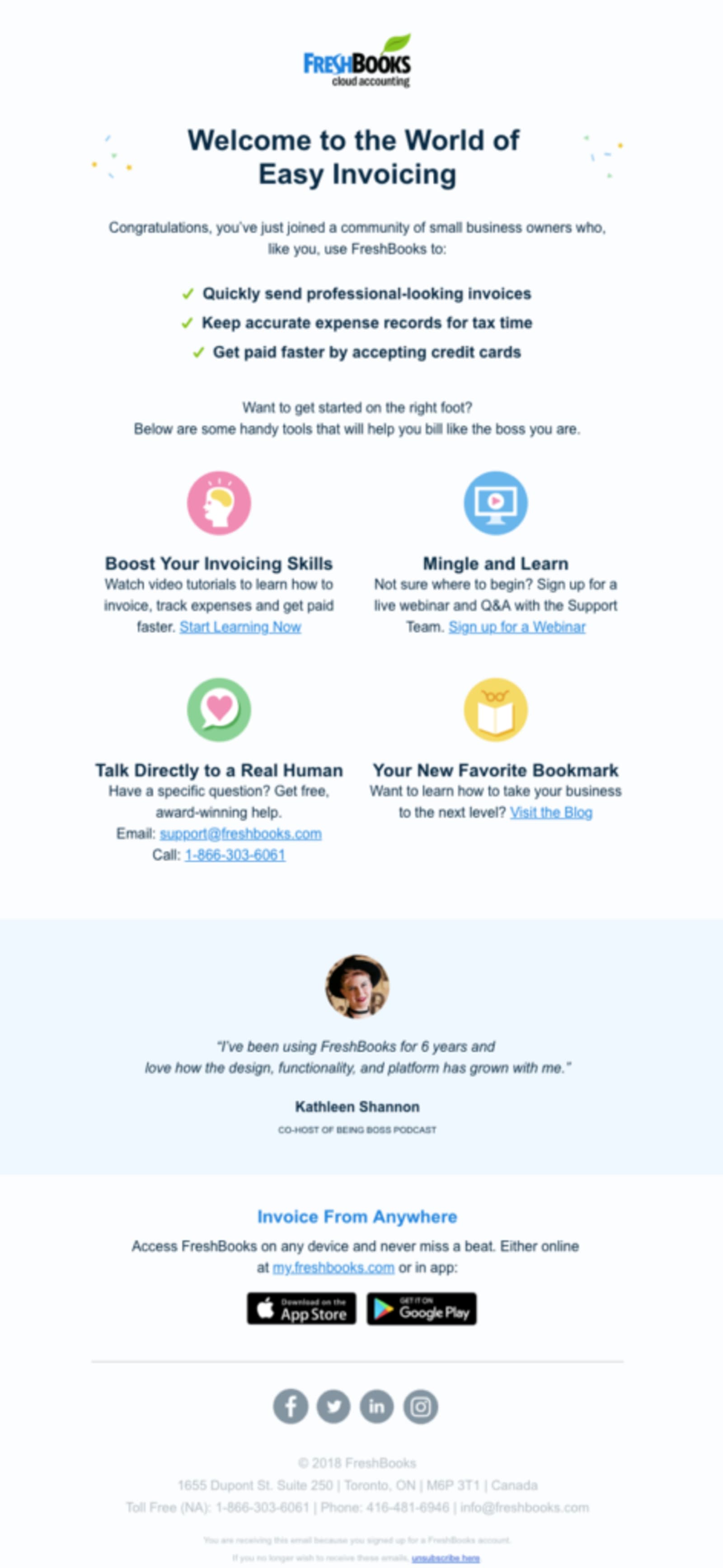
This welcome email from Freshbooks is a great example because they:
- stat their value proposition right from the beginning;
- celebrate the user’s action;
- use social proof;
- reiterate the expected outcome;
- offer a few next steps.
The welcome email
Tip: If you include links to different resources in your welcome email and notice some of them are never clicked, delete them in favor of a simpler email.
3. The first login
The first login is your users’ first impression of your product. If you want to reduce churn, you should really focus on how you can improve their experience.
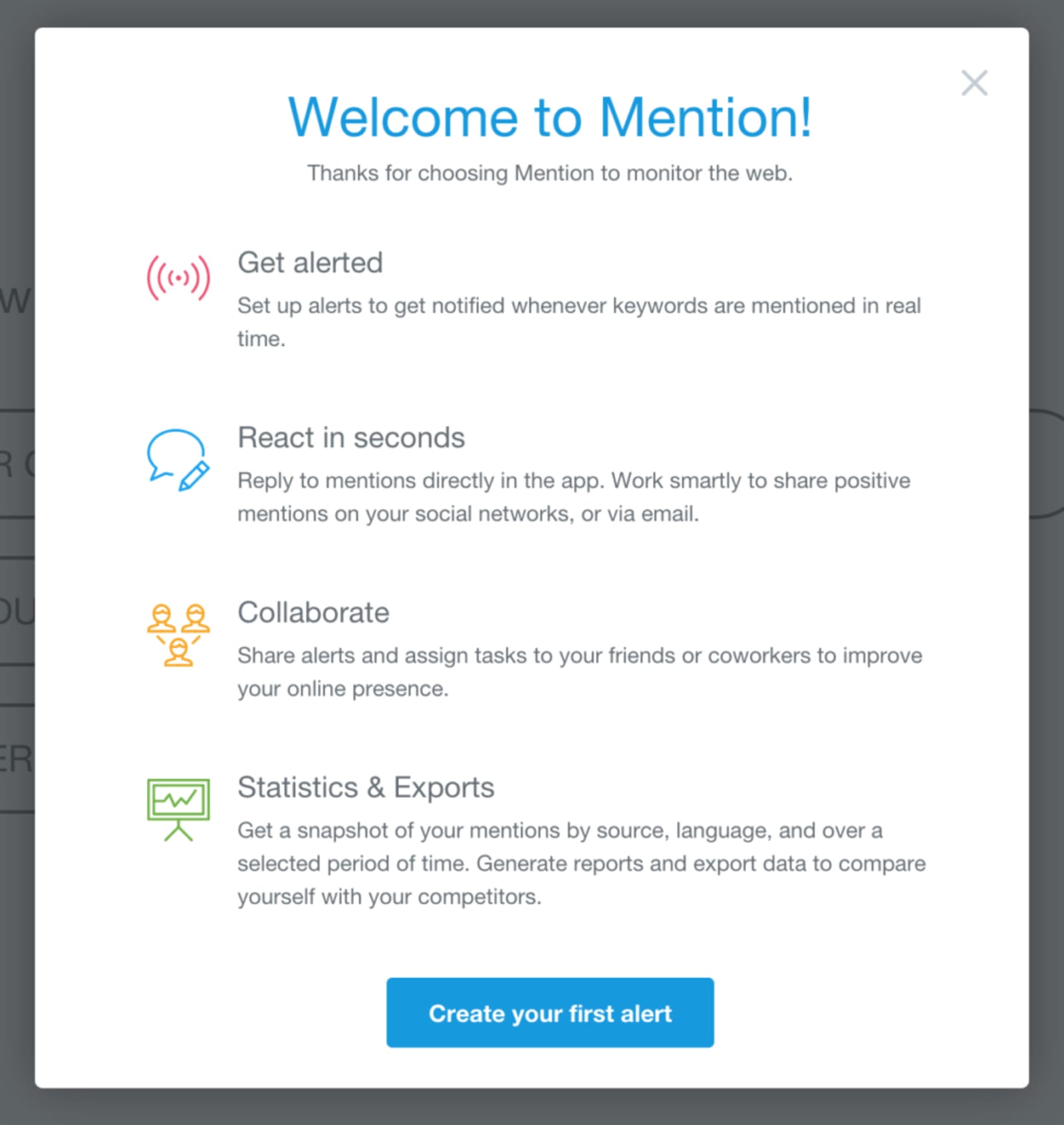
For example, Mention uses a pop-up to reiterate the benefits of using their platform and some use cases. Then, they encourage their users to “create their first alert.”
The first login
Tip: do your users actually complete the action you encourage them to take? If not, maybe there’s a more logical first step they should take.
4. Product tutorials
By now, your users probably know what your product does. But it’s unlikely they know everything about your product, so this is a great opportunity to introduce them to all its different use cases.
Explaining your product is a crucial step in the customer onboarding process, and there are a variety of ways to do this:
- Through a series of step-by-step training videos, You can use online coaching platforms to setup these training videos.
- with a video product tour;
- by embedding training modules throughout your product;
- with“getting started” checklists that keep users on track.
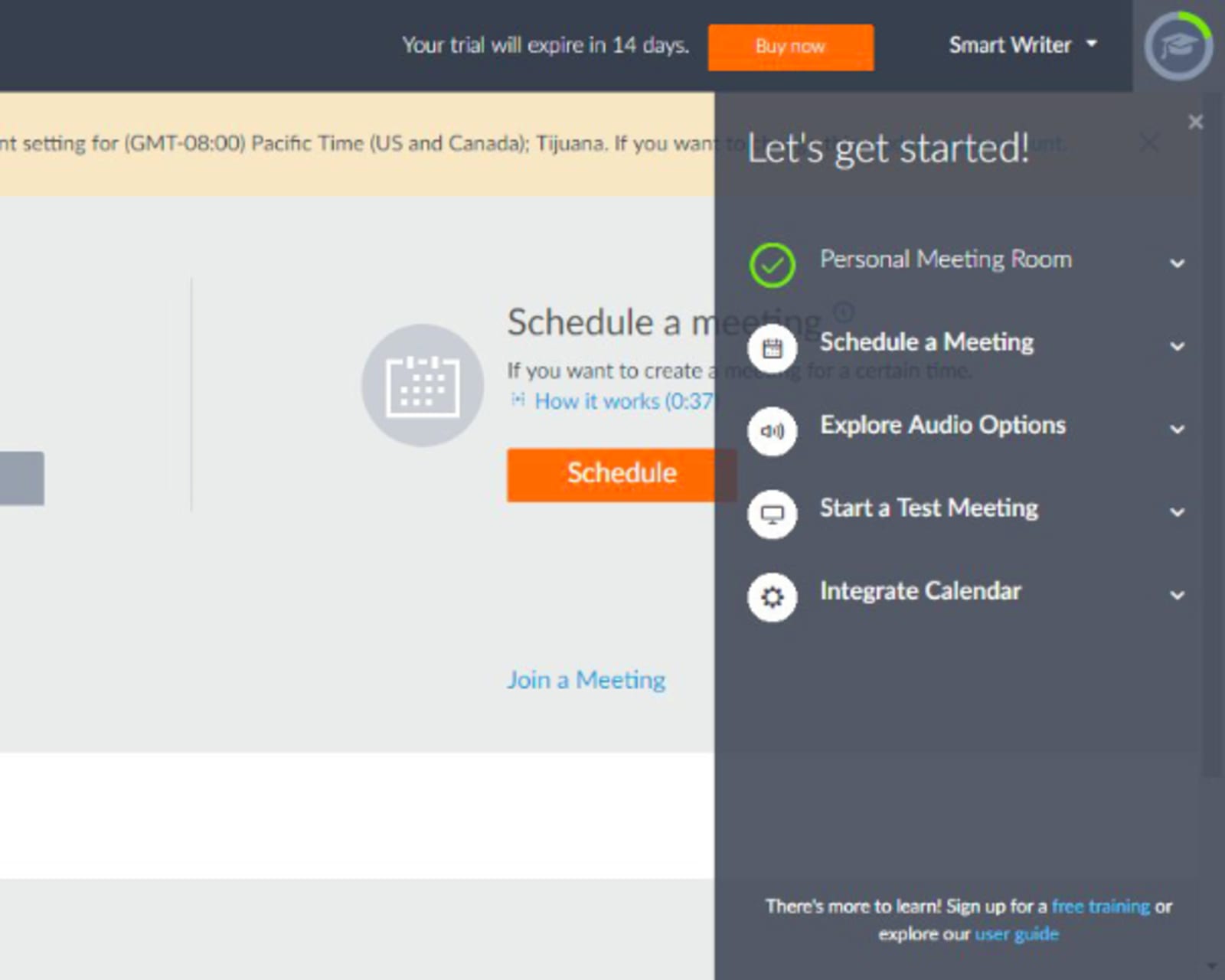
For example, GoToMeeting uses checklists to clearly lay out a roadmap for their new users and track their progress.
Product tutorials
Tip: try to make this interaction as dynamic as possible and keep your product demonstration short; you don’t want to bore your users. Also, make it possible for them to skip it and come back later. There’s nothing worse than being forced through a tutorial that you don’t need or want to see.
5. The first transaction
Your customers sign up for a reason; they want to accomplish something. But what?
The goal of your customer onboarding process should be to help your customers hit their “aha moment”.
“The aha moment is the point that the value of your product finally clicks for a user.”
For example, Facebook considers their users hit their “aha moment” when they add at least seven friends within the first 10 days of using their platform.
Figuring what your customers are trying to accomplish is crucial to creating an effective onboarding process. Once you find it, you should help them get their desired outcome as quickly as possible.
Tip: To find your own “aha moment”, take a look at your customer data. Is there a noticeable moment after which customers are more likely not to churn?
6. In-app notifications
Regardless of the nature of your product, in-app notifications have a strong potential to re-engage users.
You can use in-app notifications to:
- draw attention to critical features users might be ignoring;
- congratulate users on their progress;
- remind users about the steps they need to complete;
- improve your SaaS platform
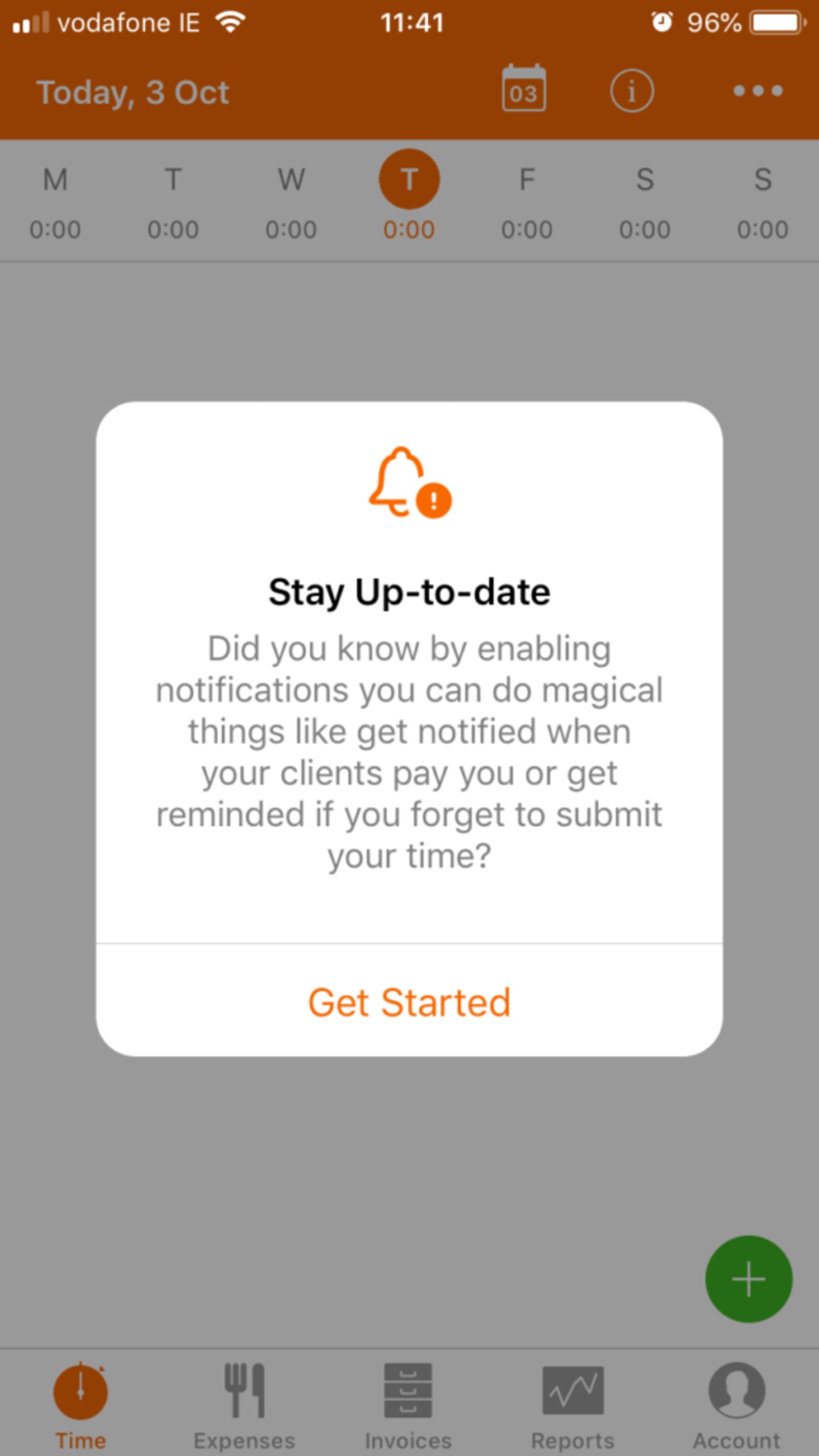
- give users tips (like in this example from Harvest).
In-app notifications
Tip: getting this right isn’t easy. Experiment with different frequencies, amount of information, format, and segmentation.
How to measure SaaS onboarding
Determining the effectiveness of your customer onboarding process is quite easy - you should either see a rise in your monthly recurring revenue or your churn rate.
Gathering the needed info, though, is another story. For that, we recommend using a customer success software platform like Custify, because monitoring your onboarding metrics 24/7 is critical.
The ultimate goal of onboarding is to carry users into a paid plan. Therefore, you need to measure your conversion rate from free trial to paying subscriber.
A customer success software platform can help you with that. It can identify customers whose trial is about to expire in real-time and notifies you to contact them right away to increase your trial-to-paid conversion rate.
It can also help you identify at-risk customers so you can take action in time and reduce unwanted churn. The customer health feature will let you know when it’s time to reach out and address potential issues before your customers decide to leave you.
Conversions are an essential metric, but they’re not always directly linked to your onboarding process. Therefore, measuring customer engagement is also necessary.
Here are a few insights you should focus on that a customer success platform can help with:
- How often are your customers logging in?
- How long do they stay logged in?
- How many features are they using?
- Which features are the most popular? Which ones are ignored?
- When do they use certain features?
Customer onboarding mistakes to avoid
In today’s very competitive market, it’s already very difficult to attract new customers. So the last thing you want to do is lose them.
One of the most frequent reasons for churn reaching out to your customers too late, after they’ve already made up their mind to stop using your product.
Although using a customer success platform can definitely help with that, there are also other things you can do (or rather avoid) to make sure your onboarding process is as effective as possible.
We’ve grouped them in a checklist you can save or print and keep close by while you design your customer onboarding process.
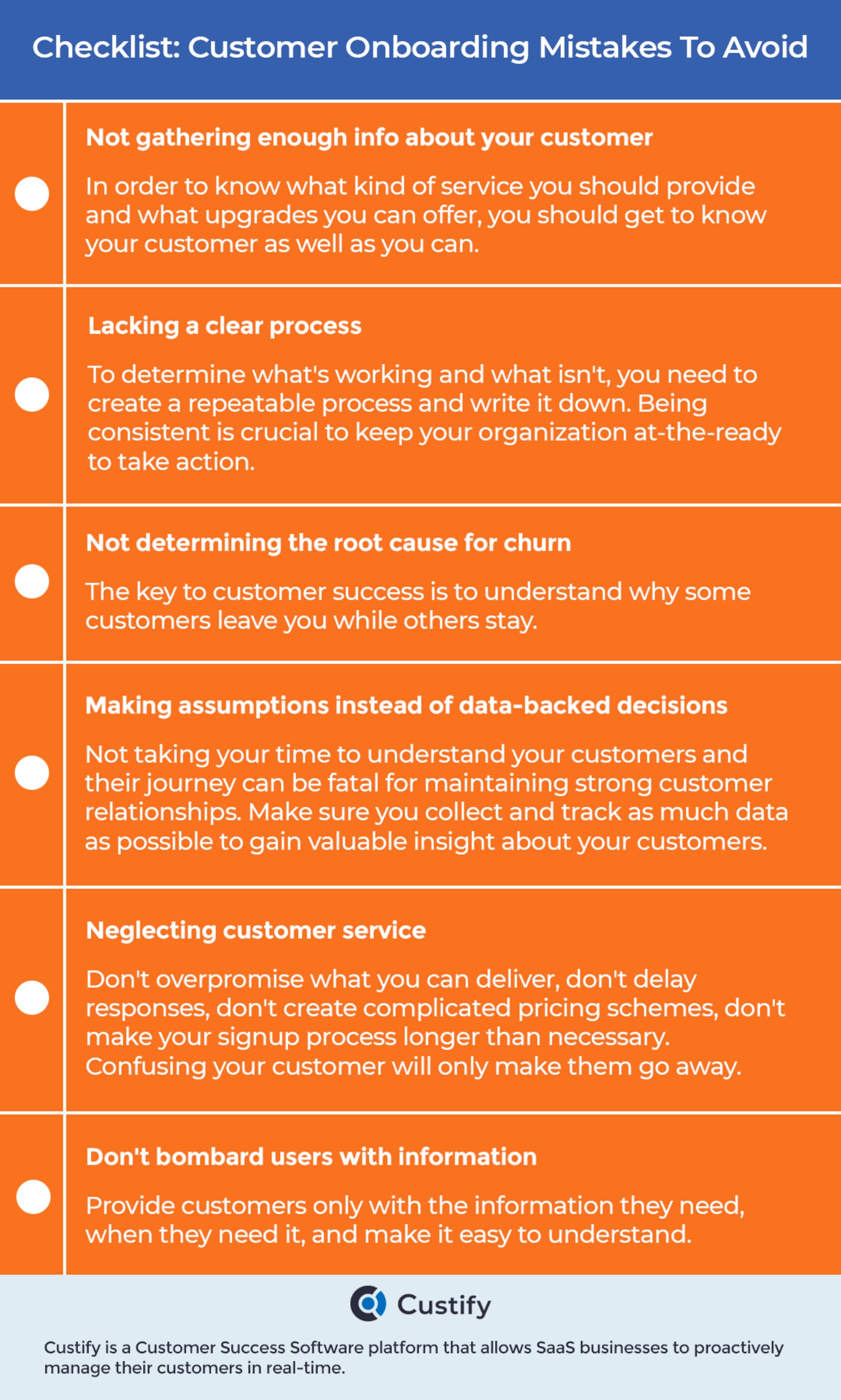
Customer onboarding mistakes to avoid
As you can see, there’s no such thing as one-size-fits-all when it comes to customer onboarding. Every business is different.
In today’s business landscape, personalizing your onboarding process is not only a best practice but also something your customers themselves will demand from you.
Also, customer onboarding should continually be optimized. Otherwise, you’ll find yourself back to square one quite quickly.

Philipp Wolf is the CEO of Custify, a customer success software platform for SaaS businesses. During high school, Philipp started working at Avira where he successfully built and led various teams with his hands-on approach. After seeing how companies spend big money getting new clients without a systematic approach, Philipp made it his mission to provide a solution to this problem. So he founded Custify, a platform that takes the pain out of customer success management and allows agents to spend time with clients rather than organizing CRM data.