Every business owner eventually notices the same problem. Somewhere between the fourth logo variation and the third designer handoff, the brand starts to look like it was built by a committee, because it was. Fonts drift. Colors shift half a shade. The tone of the copy on the website doesn't match the tone on the social posts. None of it is a disaster on its own, but together it chips away at how professional and trustworthy the brand looks to the people who matter most, your customers.
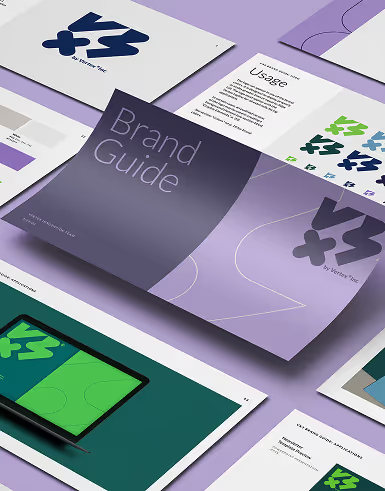
Brand consistency isn't really about having a style guide sitting in a shared drive somewhere. It's about whether the version of your brand a customer meets on Instagram matches the version they meet on your website, in your emails, and on the flyer you handed them at a trade show. A graphic design monthly service exists precisely to close that gap, keeping every asset aligned without you having to police it yourself. Reach out to Delesign to see how a dedicated design team keeps that consistency intact from day one.
What Brand Consistency Actually Means Beyond the Style Guide
A style guide tells people what your brand should look like. It doesn't guarantee that's what actually gets produced. Real brand consistency shows up in the small decisions no document can fully anticipate. How much white space surrounds your logo on a new product mockup. Whether your secondary color gets used as an accent or a background. How formal or casual the caption tone is on a promotional graphic versus a customer testimonial post.
These decisions pile up fast, and most businesses don't have the bandwidth to review every single one. That's where graphic design subscription services earn their keep. When one team is producing everything, from social graphics to sales decks to email headers, those small judgment calls get made the same way every time, because the same people are making them. Consistency stops being a rule you have to enforce and starts being the natural output of how the work gets done.
The Platforms Where Inconsistency Does the Most Damage
Not every channel is equally forgiving. A slightly off-brand internal document is a shrug. A slightly off-brand Instagram grid, a mismatched email header, or a pitch deck that looks nothing like your website is a different story, because those are often a prospect's first real impression of your business.
Social media is usually where the cracks show fastest. Posts get created in a hurry, sometimes by whoever has five minutes free, and brand guidelines quietly slide down the priority list. Paid ads carry the same risk, especially when different platforms need different dimensions and someone resizes on the fly without checking the details. Sales materials matter just as much. A pitch deck or one-pager that looks dated or inconsistent can undercut a deal before the conversation even starts. On demand design services help here because requests move through one dedicated designer instead of getting scattered across whoever happens to be available that week.
Why Rotating Designers Are the Silent Killer of Brand Cohesion
Here's a pattern that most businesses don't clock until it's already cost them time and money. They hire a freelancer for a project, that freelancer moves on, and six months later they're onboarding someone new who has to learn the brand from scratch. Multiply that by a few cycles and you end up with a brand that's been reinterpreted by five different people, each with their own instincts about spacing, color, and tone.
A rotating cast of designers means rotating interpretations of your brand. Even with a detailed brief, no two designers make identical choices on the details that don't get written down. That's precisely why a dedicated designer model matters more than it might seem. When the same person is working on your brand consistently, they build an internal sense of what looks right for you, the same way an in-house hire would, without you having to carry the cost of an in-house hire.
The Real Cost of Starting From Scratch Every Time
Every time a new designer takes over, there's a ramp-up period, even if nobody calls it that. Questions get asked that a returning designer wouldn't need to ask. Files get requested that should have already been on hand. Revisions take longer because the new person is guessing at preferences instead of already knowing them. None of this shows up as a line item on an invoice, but it shows up in turnaround time and in a brand that never quite feels settled.
This is where unlimited design revisions change the math. When revisions aren't capped or billed separately, there's no pressure to accept a design that's almost right just to avoid another round of fees. You can push a piece until it actually matches your brand, and the designer working on it already understands your visual language well enough to get there faster each time. Over months, that adds up to a brand identity that feels deliberate instead of one that feels stitched together.
How a Graphic Design Monthly Service Keeps Your Brand on Track
The businesses that keep their brand tightest over time usually aren't doing anything exotic. They've simply removed the friction that causes drift in the first place. One dedicated designer, one flat monthly rate, and a queue that doesn't require renegotiating scope every time a new request comes in.
That combination is what affordable design subscription services are built to deliver. Instead of juggling freelancers, negotiating per-project quotes, or hiring a full-time designer you may not have year-round work for, you get consistent output from someone who already knows your brand, backed by unlimited revisions and a turnaround that keeps pace with how fast your business actually moves. Give Delesign a call or drop us a message when you're ready to stop patching brand inconsistencies and start preventing them.

Our designers work with you as part of your team to ensure quality results.