There are dozens of ways to generate and close leads. This is especially true in today’s times, where there’s plenty of outlets to extract and redirect leads from. But as a consequence of this phenomenon, more companies (including competitors) have access to this audience of leads, which eventually results in increased competition.
Competition has a direct impact on the number of resources needed to acquire customers inorganically. So tougher the competition, the higher the customer acquisition costs. This can be an impediment to growing businesses, which have to do away with lower margins as a result of increased spending on acquisition.
The same isn’t the case when it comes to a few organic marketing channels. A report from Harvard Business Review states that customers acquired through organic means like referrals are 16% more profitable, and contribute more to the bottom line.
So throughout this article, we’ll explore such benefits in detail and help you make a stronger case as to why you should consider leveraging referrals to acquire customers.
6 Key Benefits Of Leveraging Referrals For Your Business
1. Efficient Customer Acquisition
With referrals, you’re using your existing customer base or audience as your marketing channel. This audience could include people who’ve previously interacted with your content on other channels, apart from your paying or converted customers. They’re the means of communication for referrals, and oftentimes, it doesn’t cost much in comparison to inorganic channels.
Given that you already have access to this audience — all you need to gain referrals is to have a product worth talking about, and the right incentives in place. This gives your customers and followers a reason to share and recommend your product, which comes with little to none operational overheads. With the right referral marketing tool and infrastructure set up for referrals, your product can attract many more customers, at a much lesser cost.
Take for example Dropbox, where referrals were a key part of their growth strategy. It helped them grow their user base by 3900% by offering extra storage to both referring and referred customers. Achieving the same amount of growth through other paid marketing channels would have cost Dropbox tens of millions more — apart from taking more time and effort to pull off.
Gaming site Spider Solitaire Challenge similarly used referrals to drive early growth. They offered a premium subscription to their early users if they referred two more players to their solitaire game. This drove their first 5,000 users and kept acquisition costs minimal.
2. Generates Quality Leads
When potential leads get to know about you first from an existing customer or follower, they take it as a strong signal of trust and legitimacy. Customers who might be in the market for solutions similar to yours are likely to convert if your product was referred or recommended to them. 84% of respondents in a Nielsen survey stated they find referrals to be the most trustworthy advertising and awareness channel.
— Alexa Kilroy (@AlexaKilroy) March 4, 2021
Its been 10 minutes and I’m already addicted to using @Superhuman as my email inbox. MUST TRY.
Fun: I have a referral code so you can get your first month free!
Most of these leads who look for recommendations and referrals are the ones with deeper intent to buy, which is where the need to look for customer reviews and recommendations comes from. This makes referred customers convert better and quicker, helping you reduce your marketing and sales overheads so you could focus more on serving your paying customers.
3. Validates Product Market Fit
Setting up a referral program is only one part of the strategy and setting it up to actually work, i.e. generate referrals is another. Asking your customers to refer new customers doesn’t guarantee they’ll do it. So what do you really need to maximize your chances of referrals?
A product that effectively solves your customers’ problems, in a way they’re willing to pay for it, or even recommend it to others. Getting to this stage in the product life cycle is what’s known as achieving Product-Market Fit. Indicators like NPS (Net Promoter Score) also rely on customers’ willingness to recommend products to their friends.
When your customers are happy with the product, they’re also more willing to recommend it, which indirectly helps prove if the product is indeed effective, and has a Market Fit.
4. Offers Independence & Control
With many inorganic marketing platforms, you’re often faced with increasing acquisition costs CAC) while being dependent on such platforms to get new users. This can make it difficult to keep growing, and eventually will flip your product economics upside down. Increased competition being the main reason, you’ll be left with no option but to spend more than the last guy.
On the other hand, with referral marketing, you own your audience and have complete access to them, across different platforms. This means your customers and followers will come with you wherever you go - along with potential customers they can refer. So leveraging referrals help you build a moat around your customer acquisition engine, reducing dependency on inorganic channels and making it easier for you to grow.
As an example — imagine you’re using Facebook Ads for getting new customers to sign up. 14-15 months in, you start seeing your CPC (Cost-Per-Click) go up because now other advertisers (your competitors) are bidding on the same audience. This won’t taper off — it usually only gets worse.
So by using channels like referrals, where you ask every newly registered customer to refer new ones, you automatically increase your chances of acquiring new customers organically and cost-effectively.
5. Improves Brand Recognition & Conversions
One of the biggest obstacles to getting healthy conversions out of your marketing efforts happens to be a lack of trust and awareness around your brand. Potential leads who’ve never come across your product are going to approach you with skepticism, making them less likely to sign up.
If you were to embrace referral marketing — a good number of leads who come across you are likely to have been introduced by your existing customers. These leads have an easier time trusting you, since they were directed your way from someone who’s already been with you, and thinks your product is good enough for a referral. Now the same leads who were referred to you will now themselves refer you to other potential leads, spreading your brand’s message and value proposition. This helps with building better awareness around your brand, and as a result, better conversions with no extra push needed from sales.
Picture this — you’re looking at a promoted tweet on your timeline for a solution you’re evaluating. But a few days later you were recommended another product by a friend or colleague. Which one are you more likely to pick?
As we discussed earlier in this article, referrals are the most trusted source for product awareness and evaluation. This means you’re likely to evaluate the referred product in more detail, and potentially convert, or buy. The same happening on a large scale would mean increased conversion rates and sales revenue from your product.
6. Increases Product Engagement & LTV
As discussed over the last few points, customers highly value recommendations and reviews from other existing customers. This not only helps with increased conversions, but also results in increased customer retention and product usage.
Customers who trust you are more likely to understand and use the product to its full extent, while staying with you for longer to make use of their referral benefits. This increases the product’s ‘stickiness’, where frequent use makes your product an indispensable part of their processes and workflows. The longer these users stay engaged with the product, the higher their Lifetime value extends.
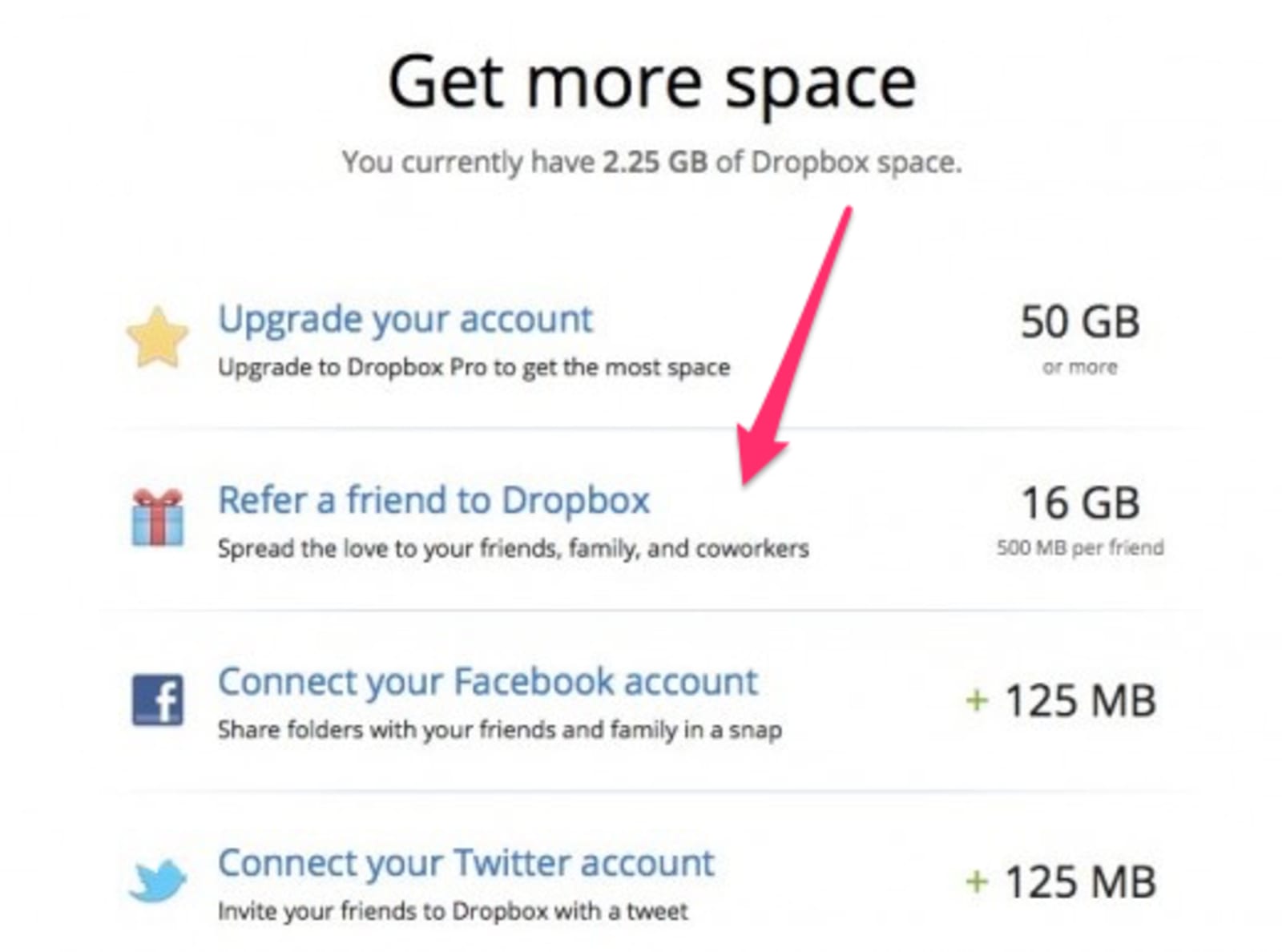
Take for example the Dropbox’s referral program — where every user got free storage, multiplied by the number of people you refer. By getting access to more storage, users are then naturally bound to stay and use the product for longer, to make use of their earned storage space. This then gives Dropbox opportunities to upsell or cross-sell to the customer over their lifetime, which directly impacts LTV.
Build A Great Product & Incentivize Users For Referrals
Referrals won’t work unless your product itself delights customers in one way or the other. So a successful referral marketing strategy hinges on a fundamentally strong product. Building a product customers love to use and talk about is key towards making your referrals work at scale.
Incentives also play an important role in triggering referrals and recommendations. Your customers need a reason strong enough for them to go out of their way to share their friends’ emails, or tweet about your product to their followers. Having the right incentives in place ensures your referrers are rewarded with a better product experience, which also gives you the opportunity to retain them for longer.
A good product combined with great incentives will give you the best chance at getting referrals, where both you and your customers are invested into getting more users for your product, generating value for everyone in the process.

Mehdi Hussen is the digital marketing manager at SalesHandy, a cold email outreach tool. He is passionate about driving organic growth and customer acquisition for startups through data-driven content marketing. He spends his spare time musing about startup growth strategies, sales productivity, and remote work. Connect with him through Twitter or LinkedIn.